by Mirza Abdul Aleem BAIG
As the geopolitical foundations of the post-Cold War order continue to fracture under the weight of great-power competition, supply-chain wars, maritime insecurity, and the accelerating weaponization of geo-economics, Prime Minister Narendra Damodardas Modi’s recent diplomatic outreach to Europe was not merely another sequence of ceremonial visits, investment announcements, or strategic photo opportunities.
In essence, it was a declaration that India now seeks to reposition itself not only as a rising Asian power, but as a central architect of a new transregional order stretching from the Indo-Pacific to the Mediterranean, leveraging multilateral frameworks and connectivity project to counter regional competition and secure vital maritime chokepoints.
Beneath the language of trade agreements, semiconductor cooperation, green energy partnerships, AI collaboration, and maritime logistics lies a deeper strategic ambition – India’s transformation from a regional actor into a global connectivity power capable of shaping the economic arteries of the twenty-first century.
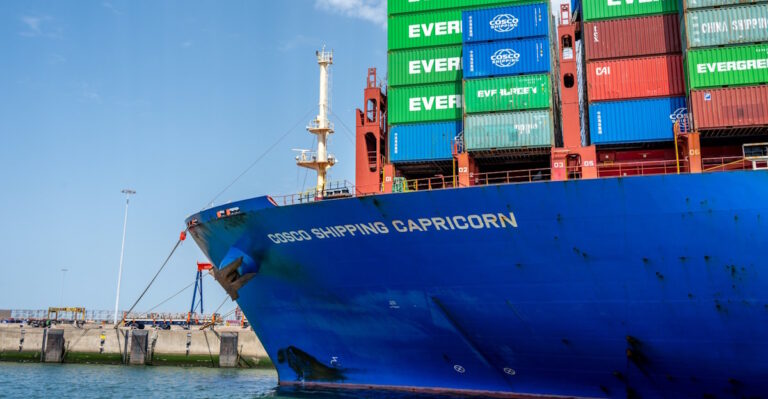
At the center of this grand strategic imagination stands the India-Middle East-Europe Economic Corridor (IMEC), increasingly portrayed as a multi-model connectivity initiative designed to significantly reduce transportation times and bolster Eurasian economic integration.
Yet history repeatedly warns that no corridor, however ambitious, can sustainably succeed if geography itself remains politically fractured. While infrastructure can connect ports, but it cannot alone connect rival strategic visions, historical mistrust, or militarized borders.
The growing enthusiasm surrounding IMEC therefore reflects both extraordinary geopolitical potential and a dangerous tendency toward strategic overestimation. India’s outreach to Europe undoubtedly signals strategic maturity, but the long-term viability of this vision depends on a question many policymakers in New Delhi still hesitate to confront directly: “can global connectivity truly emerge from a region that remains fundamentally disconnected within itself?”
The current geopolitical moment explains why Europe increasingly sees India as indispensable. The war in Ukraine, instability in the Red Sea, disruptions in global shipping lanes, uncertainty in transatlantic politics, and Europe’s complicated economic dependence on China have accelerated the search for alternative supply chains and new geo-economic partnerships.
India, with its demographic scale, expanding market, technological ambitions, and strategic positioning against China’s rise, naturally emerges as an attractive partner. Modi’s meetings across Europe reflected this changing strategic calculus.
European powers no longer view India solely as a South Asian actor; they increasingly see it as a stabilizing pillar within a broader Indo-Mediterranean framework designed to reshape Eurasian commerce and diversify geopolitical risk.
The strategic rise of IMEC must therefore be understood not simply as an economic initiative, but as part of a wider contest over the future architecture of global connectivity. In many ways, IMEC represents the Western-backed answer to China’s Belt and Road Initiative.
Unlike the BRI, however, IMEC seeks to project itself not as a sphere of dependency, but as a cooperative network linking democratic economies, Gulf capital, European technology, and Indian manufacturing potential. This distinction matters greatly in the emerging era of geo-economics, where trade routes, ports, energy corridors, data cables, and semiconductor chains increasingly shape the balance of power more than traditional military deployments alone.
Given the regional dynamics, India’s strategic calculations are therefore understandable. By linking itself simultaneously with Europe, the Gulf monarchies, and the United States, New Delhi seeks to position itself at the center of a new economic geography connecting the Indian Ocean to Europe.
This is not merely diplomacy; it is techno-geopolitical engineering unfolding in real time. India seeks to become the indispensable hinge between East and West, between production and consumption, between maritime trade and digital connectivity. Undeniably, the ambition itself is historic.
But the deeper strategic reality is far more complicated than official narratives suggest. No major connectivity architecture in modern history has achieved transformational success while bypassing its immediate regional geography. True trade facilitation demands a strategic shift towards shared regional geo-economics, proving that an infrastructure project cannot function purely as a geopolitical buffer zone.
The European Union (EU) emerged from reconciliation between France and Germany. ASEAN succeeded because Southeast Asian states gradually stabilized regional rivalries. China’s continental ambitions accelerated only after Beijing secured varying degrees of political accommodation with neighboring regions. Even America’s postwar economic order depended upon stabilizing Europe and East Asia before projecting global economic integration.
In stark contrast, South Asia today remains the exact opposite of such models. Frustratingly for policymakers and strategic planners, despite possessing immense demographic, geographic, and commercial potential, South Asia remains one of the least economically integrated regions in the world.
For decades, the central obstacle remains the unresolved strategic rivalry between India and Pakistan. This reality exposes the most important contradiction within the current IMEC narrative. India seeks leadership in global connectivity while remaining trapped in permanent confrontation within its own neighborhood.
Historically, geography imposes limits even upon great powers. India may connect itself to Europe through maritime corridors and Gulf partnerships, but Pakistan still occupies one of the most strategically consequential geographic spaces in Eurasia.
Strategically positioned between South Asia, Central Asia, the Arabian Sea, western China, and the Gulf, Pakistan cannot simply be erased from long-term Eurasian strategic equations. Bypassing geography is not the same as overcoming geography. Fundamentally, this is where much of the current war-gaming surrounding IMEC becomes strategically incomplete.
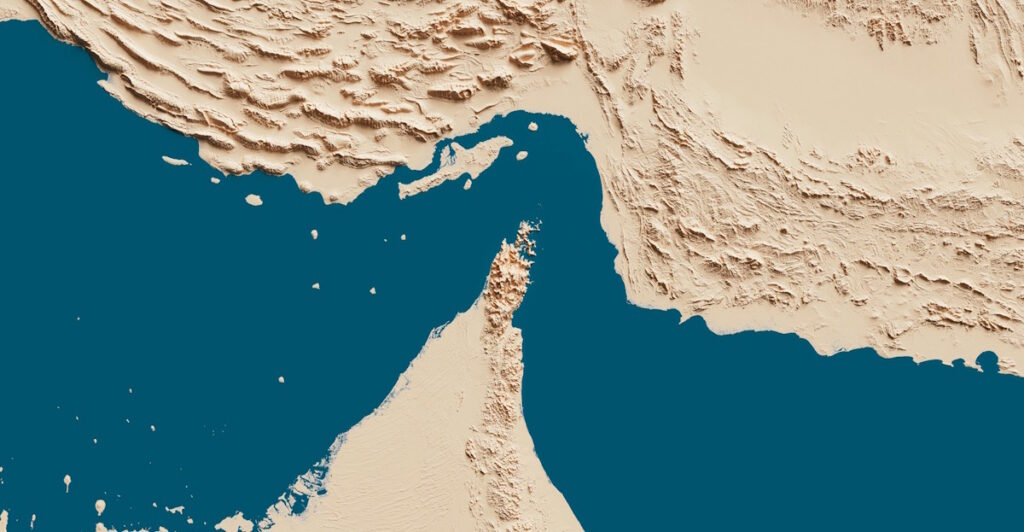
While highly efficient, maritime routes alone cannot permanently replace continental integration. Recent crises in the Strait of Hormuz and broader Middle Eastern instability exposed how vulnerable sea-dependent supply chains remain during geopolitical disruptions. If conflict escalates across the Gulf or Eastern Mediterranean, the entire logic of uninterrupted connectivity immediately comes under pressure.
Such fragmentation may serve short-term strategic competition, but it weakens the larger possibility of creating a truly interconnected Eurasian order. Europe itself quietly understands this dilemma. European strategic thinking prioritizes stability, predictability, and uninterrupted trade.
Investors and policymakers in Brussels, Rome, Berlin, and Paris recognize that enduring India-Pakistan hostility increases risks ranging from military escalation and maritime insecurity to insurance costs and supply-chain uncertainty. Deeply entrenched nuclear powers locked in unresolved confrontation do not provide ideal foundations for ambitious transcontinental geo-economic integration.
However, this does not diminish India’s rise. Nor does it invalidate IMEC’s potential. Rather, it highlights an unavoidable strategic truth – sustainable geo-economics ultimately depends upon geopolitical stabilization, which serves as the essential bedrock for uninterrupted cross-border investment and trade.
The future of Eurasia will not be shaped by isolated corridors competing endlessly against one another. It will instead belong to interconnected corridor systems where maritime routes, railways, energy pipelines, digital infrastructure, ports, and regional markets reinforce one another across political boundaries.
In such a future, IMEC, Gulf logistics hubs, Central Asian transit systems, and potentially normalized South Asian trade networks could become mutually reinforcing rather than mutually exclusive, drastically slashing transit times and operational overhead across the entire global supply chain.
For the Global South, this distinction carries enormous significance. The emerging world order increasingly revolves around connectivity competition. Nations able to position themselves as indispensable transit and logistical hubs will accumulate strategic leverage disproportionate to their military power.
Yet connectivity without stability produces vulnerability rather than prosperity. The great danger facing Eurasia today is that geo-economics is being militarized faster than regions are being politically reconciled.
India’s growing diplomatic footprint under Modi reflects a new blend of confidence, ambition, and strategic adaptability. Meanwhile, Europe’s outreach toward India reflects shifting global realities. Ultimately, IMEC reflects the changing logic of twenty-first century power politics.
But unless South Asia itself becomes economically and politically connectable, the dream of seamless global connectivity will remain incomplete. Ultimately, the real test of strategic leadership is not merely the ability to build corridors across oceans. It is the ability to transform rival geographies into cooperative spaces.
Now more than ever, the unfinished geography of Eurasia still demands political wisdom greater than infrastructure ambition. Without regional integration, regional stability, and meaningful normalization between India and Pakistan, IMEC risks becoming less a transformative geo-economic order and more a selective geopolitical passage operating within an unstable neighborhood.
In the final strategic calculation, the future of IMEC and India’s wider global connectivity ambitions will not be decided solely in the ports of the Mediterranean, the capitals of Europe, or the investment corridors of the Gulf, but within the unresolved geopolitical fault lines of South Asia itself.
In view of new developments and taking all variables into account, the world is entering in the age of corridors, but the success of those corridors will ultimately depend on whether states choose permanent competition or strategic coexistence. That remains the decisive question shaping the future of Eurasia, the Global South, and the emerging architecture of global connectivity itself.