by Sebastien GOULARD
Despite the rise of Global South powers such as the BRICS countries, and the exclusion of Russia following its invasion of Ukraine, the G7 remains a relevant format in international relations. The Evian Summit in France was no exception.
A Meeting Between the G7 and the Global South
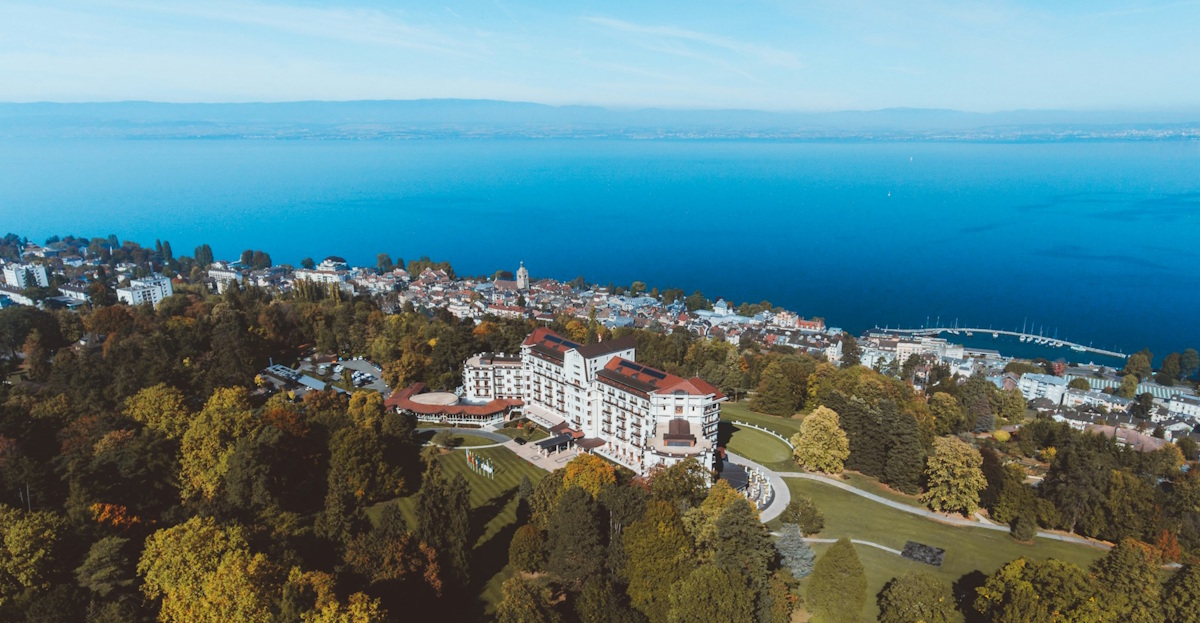
From 15 to 17 June 2026, the 52nd G7 Summit, chaired by France, took place in Evian, where major issues involving Western powers and Global South countries were discussed.
All G7 heads of state and government attended the summit, alongside European Commission President Ursula von der Leyen and European Council President António Costa. U.S. President Donald Trump even extended his stay in France, remaining in Versailles to sign a memorandum of understanding with Iran.
Several non-G7 countries were also invited to discuss the state of the world. French President Emmanuel Macron welcomed his Brazilian counterpart Luiz Inácio Lula da Silva, Kenyan President William Ruto, South Korean President Lee Jae-myung, and Indian Prime Minister Narendra Modi. Representatives of these countries had already been working together in the months leading up to the summit to prepare its agenda.
Other heads of state and government also participated in the G7 Summit. Ukrainian President Volodymyr Zelensky held discussions with G7 leaders aimed at increasing pressure on the Russian aggressor. Ukraine remains a priority issue for G7 members.
Qatari Emir Tamim bin Hamad Al Thani, Egyptian President Abdel Fattah el-Sisi, and UAE President Mohammed bin Zayed Al Nahyan also attended several meetings to discuss security and connectivity in the Middle East amid ongoing tensions, as well as the agreement reached between the United States and Iran concerning the Strait of Hormuz.
With Brazil, India, the United Arab Emirates, and Egypt participating, four BRICS+ members were associated with the G7 Summit, demonstrating the potential for cooperation between the G7 and BRICS+ in addressing global challenges.
A Time for Meetings and Negotiations
Beyond the official agenda, numerous bilateral discussions took place to address ongoing issues and negotiate new agreements. Among these meetings was a discussion between European Commission President Ursula von der Leyen and Kenyan President William Ruto concerning the EU–Kenya Economic Partnership Agreement and projects linked to the European Union’s Global Gateway initiative.
Italian Prime Minister Giorgia Meloni met with the Brazilian President to discuss cooperation and investment projects in infrastructure and energy between Italy and Brazil. UAE President Mohammed bin Zayed Al Nahyan and Indian Prime Minister Narendra Modi reviewed progress on the Comprehensive Strategic Partnership signed between their two countries in 2022.
The India–Middle East–Europe Economic Corridor (IMEC), launched during the 2023 G20 Summit, was highlighted by several leaders, including the President of the European Commission, as an initiative deserving support to ensure the security of global trade routes in the face of emerging threats, particularly in the Middle East.
A Joint Declaration
In a joint declaration, G7 members reaffirmed their support for Ukraine, notably by increasing the provision of air defence capabilities and strengthening sanctions against Russia’s energy sector. G7 countries also pledged to cooperate with Kyiv in securing its energy supply for the coming winter. These commitments suggest that Washington is displaying stronger support for President Zelensky.
The leaders also addressed the situation in the Middle East and the agreement reached between the United States and Iran, calling for greater diversification of energy supply routes. They reiterated their determination to prevent Iran from ever acquiring nuclear weapons and reaffirmed their support for Lebanese authorities in safeguarding their country’s sovereignty.
They also called for the rapid implementation of political measures in the Gaza Strip, a position previously advocated by President el-Sisi during the summit. Regarding the Indo-Pacific region, the leaders reaffirmed their opposition to any attempt to alter the status quo in the South China Sea and the Taiwan Strait. They further expressed concern over North Korea’s nuclear and ballistic missile programmes, an issue that is expected to become a priority at the next G7 Summit under the U.S. presidency, as well as at the G20 Summit scheduled for December 2026.
This declaration highlights the G7 members’ commitment to upholding international law and ensuring freedom of maritime navigation. Far from being merely symbolic gatherings, G7 summits remain key moments in international diplomacy. The inclusion of other powers, including BRICS+ countries, enhances their effectiveness as platforms for dialogue capable of addressing the many challenges facing the world today.