by Irtija AHMAD
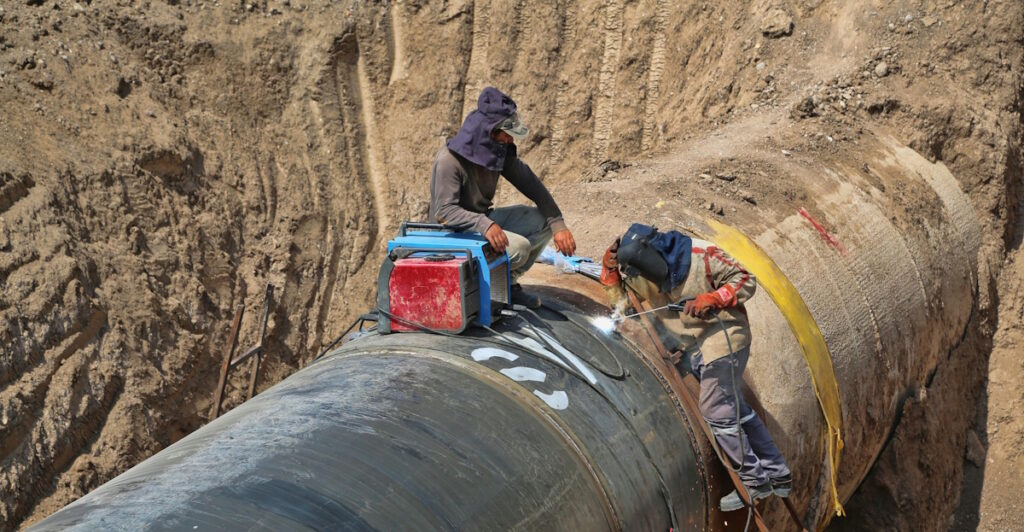
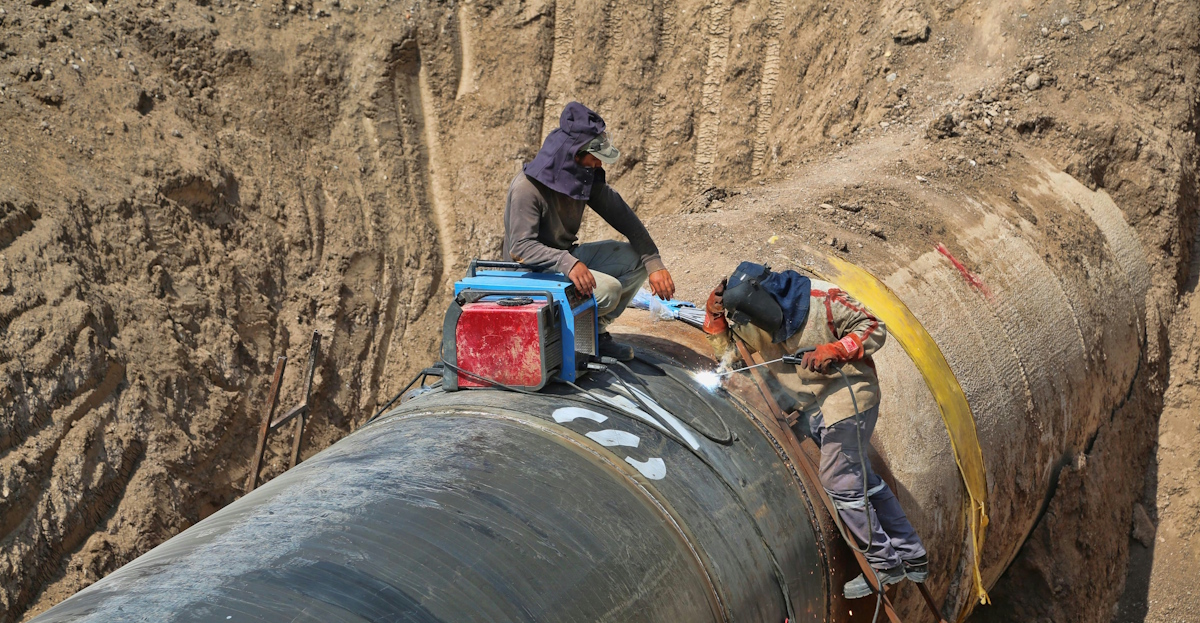
For nearly thirty years the gas pipeline meant to run from Iran’s South Pars field to the Pakistani border has been the project that almost happened. It was conceived in 1995 as a trilateral link to carry Iranian gas through Pakistan and on to India, which is where the name “the Peace Pipeline” comes from. India left the arrangement under American pressure. Pakistan went ahead alone, broke ground in 2013, and then stalled. Iran finished its own section years ago. The gas sits at the border, metered and ready, while Pakistan’s half of the route is still a line on a map.
For most of that time the deadlock looked permanent. It no longer does, and the reason has less to do with the pipeline itself than with what happens to a country’s energy supply when the sea lanes stop being reliable.
In February the Strait of Hormuz closed. Within two days the major shipping lines had suspended transits through a channel that carries roughly a fifth of the world’s liquefied natural gas. Pakistan felt it at once. The country bought almost all of its 2025 LNG, about 6.6 million tonnes, from a single supplier, Qatar, and every cargo of it passed through Hormuz. A disruption a thousand kilometres away exposed how little margin the country has. When one chokepoint can cut off the entire gas supply, diversification stops being a talking point and turns into a basic requirement.
The pipeline Pakistan has spent a decade avoiding runs overland and never touches Hormuz. Gas piped from the Iranian border does not wait for a tanker to clear a contested strait or for an underwriter to agree to cover the voyage. It arrives. So a project that policymakers had filed away as a relic of the 1990s now looks like exactly the kind of supply that holds up when shipping does not.
The obstacle was never the engineering or the distance. The full route runs more than 2,700 kilometres and would carry enough gas to power millions of homes and run the factories Pakistan’s economy badly needs. The obstacle was Washington. US sanctions on Iran’s energy sector, plus the threat of secondary penalties against anyone who trades with it, kept Islamabad frozen. Pakistan asked for a waiver and was turned down. Until quite recently it was preparing to walk away from the project and settle the contract out of court rather than face the penalties.
What has changed is the diplomacy. In April, Islamabad hosted talks between the United States and Iran and acted as the mediator. By mid-June the two governments had agreed on the text of a framework to stop the fighting, reopen the Strait of Hormuz to commercial traffic, and end the naval blockade of Iranian ports. The harder questions, sanctions relief among them, were left to a sixty-day negotiating window. That window is open now, and it is the first time in years that the sanctions architecture around Iran’s energy exports has been genuinely up for negotiation. Pakistani analysts have already noted that the odds of reviving the pipeline rose once the talks began.
The strongest case for moving on it is about connectivity. South Asia is one of the least economically integrated regions in the world, and its cross-border infrastructure sits well below what the size of its economies would suggest. A working Iran-Pakistan pipeline would do more than feed Pakistani power plants. It would be the first major cross-border energy link of its kind in the region, and it would show that overland integration can function even between governments with a complicated relationship. Pakistan sits between the gas reserves of the Gulf and the demand centres of South and Central Asia. A pipeline that actually moves gas is the precondition for most of what regional planners have wanted to build on top of it, from onward connections to eventual cross-border power trading.
The risks are real and worth stating plainly. Iran is not a dependable supplier, and Pakistan should not swap dependence on one chokepoint for dependence on one neighbour. The answer is not to reject the pipeline but to treat it as one source among several, alongside seaborne LNG and domestic production. Pakistan needs more than one option. Right now, it effectively has one.
The Peace Pipeline was named for a goal the region never reached. The three things that kept it in the ground, a closed market, a hostile sanctions regime, and the assumption that shipping would always get through, are the same three now under negotiation. If the sixty-day window delivers even partial sanctions relief, Pakistan and its partners would be better off laying pipe than filing lawsuits.