by Mirza Abdul Aleem BAIG
What began in the Middle East has transformed into a contest with far-reaching global consequences. This is no longer just a crisis in the Gulf, it is a calculated contest over the control of global lifelines and the future architecture of emerging world order.
The confrontation between Iran and the United States has exposed something far more consequential than regional instability. It has revealed how the world’s critical arteries, energy routes, trade corridors, and connectivity projects, can be weaponized in great power rivalry.
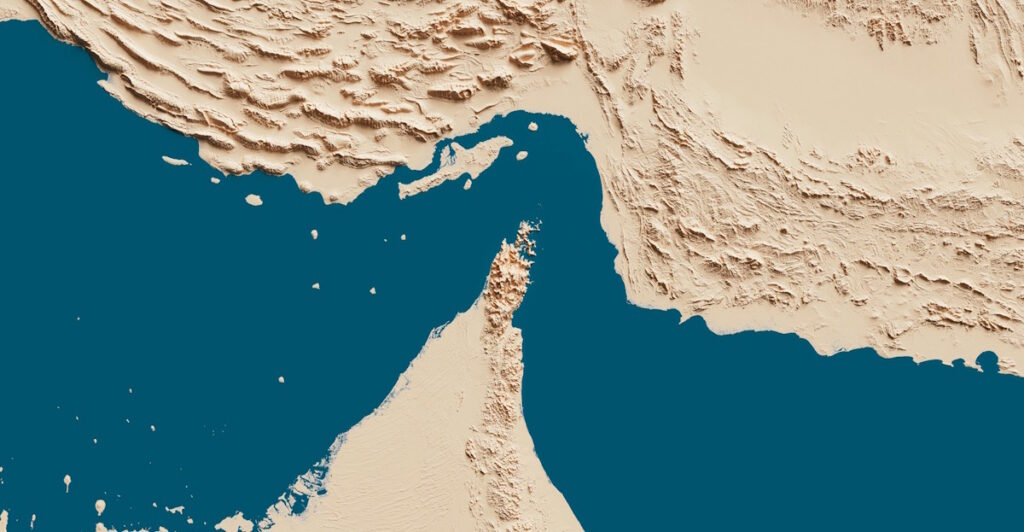
At the center of this unfolding saga is China, not as a direct participant, but as the principal stakeholder whose economic lifelines are being tested. From the Strait of Hormuz to the Indian Ocean, and from the Belt and Road Initiative (BRI) to the emerging India-Middle East-Europe Economic Corridor (IMEC), what we are witnessing is the quiet restructuring of global connectivity under conditions of strategic pressure.
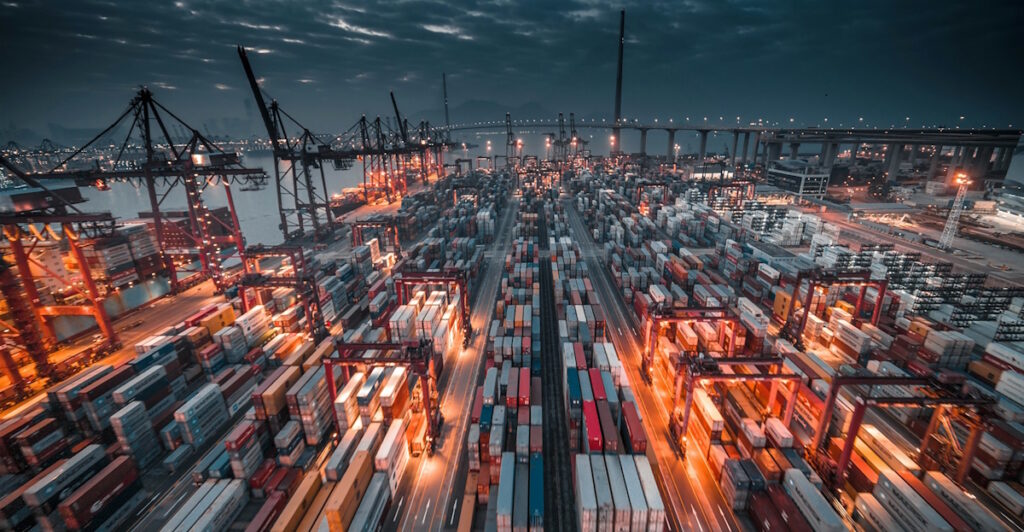
For Beijing, the stakes are existential in economic terms. China’s rise has been underwritten by the assumption of stable access to energy and uninterrupted maritime trade. The BRI, often presented as a vision of connectivity and cooperation, is in reality a grand strategy to mitigate precisely these vulnerabilities – diversifying routes, reducing dependence on chokepoints, and embedding China at the center of global commerce.
Yet the current crisis has exposed the limits of that strategy. No matter how extensive its land corridors across Central Asia or its investments in ports from Gwadar to the Mediterranean, China remains deeply dependent on maritime flows that it does not control.
The Strait of Hormuz, therefore, becomes more than a flashpoint, it becomes a stress test. Disruptions there ripple through China’s entire economic system. Energy costs rise, supply chains tighten, and export competitiveness weakens. What makes this pressure particularly potent is its indirect nature.
As a matter of strategy, the United States does not need to confront China directly to affect its economic stability. By operating in a region where China’s dependence is high and its influence is limited, Washington is able to impose costs without escalation into great power conflict. This is where the strategic logic becomes unmistakable.
Geopolitically, the Iran-U.S. confrontation is functioning as a peripheral pressure mechanism in the broader U.S.-China rivalry. It signals to Beijing that its grand connectivity ambitions, whether maritime or continental, remain vulnerable to disruption at critical nodes. Undoubtedly, the BRI’s promise of resilience is being tested not in theory, but in real time.
At the same time, an alternative vision of connectivity is quietly gaining momentum. The India-Middle East-Europe Economic Corridor (IMEC), backed by the United States and its partners, represents not just an economic project but a geopolitical counterweight to the BRI. Where BRI seeks to integrate regions under Chinese-led infrastructure networks, IMEC aims to reconfigure trade flows through a framework aligned with Western and allied interests.
In a stable environment, these two models might have coexisted. In the current climate of disruption, however, instability itself begins to shape preferences. As maritime routes become riskier and geopolitical tensions intensify, the appeal of diversified and politically aligned corridors increases.
IMEC, still in its formative stages, benefits from this shift. It is not that BRI is collapsing – it is that its vulnerabilities are becoming more visible, while its alternatives gain strategic relevance. From a strategic perspective, for China, this creates a layered dilemma. It must not only secure its existing supply chains but also defend the credibility of its long-term connectivity vision.
Structurally intertwined, China’s economic system remains deeply intertwined with global maritime stability. The longer the Iran-U.S. confrontation persists, the more it risks diverting China’s strategic focus inward. Resources that might have been directed toward technological competition or regional influence must instead be allocated to economic stabilization and energy security.
This is precisely where the United States gains advantage, not through decisive victory, but through sustained pressure that incrementally constrains its principal competitor. In this evolving equation, India emerges as a beneficiary of shifting dynamics. Its geographic position astride key Indian Ocean routes, combined with its growing alignment with Western and regional partners, enhances its strategic relevance.
As global supply chains seek alternatives to reduce dependence on China, India stands to attract investment and expand its role in manufacturing and logistics networks. More importantly, India is engaging in a framework that benefits from the current strategic alignment of major powers.
This does not make India immune to the broader risks of global disruption, but it does place it in a comparatively advantageous position. Strategic attention, once diffused, is now being concentrated. As China navigates pressures in the Gulf and reassesses the resilience of its trade networks, its ability to sustain focus across multiple fronts may be incrementally reduced.
For India, this creates space – space to consolidate its position, to strengthen partnerships, and to shape regional dynamics with greater confidence. Yet, it would be simplistic to interpret these developments as a clear shift in favor of one actor over another. The costs of prolonged instability are systemic. Energy shocks, disrupted trade, and economic uncertainty affect all major economies, including those that may appear to benefit strategically.
In today’s world, the global system is too interconnected for any actor to remain insulated from sustained disruption. What this moment ultimately reveals is the transformation of global competition. Infrastructure is no longer neutral; it is strategic. Trade routes are no longer passive; they are contested. It shows how chokepoints can become leverage, how corridors can become competition, and how interdependence can be turned into vulnerability.
Initiatives like BRI and IMEC are not merely economic projects; they are instruments of influence in a world where connectivity defines power. The Iran-U.S. confrontation, viewed through this lens, is not an isolated conflict. It is a demonstration of how pressure can be applied across domains, – military, economic, and infrastructural -, without direct confrontation between major powers.
For Beijing, the lesson is clear and urgent; resilience must extend beyond expansion to include the ability to withstand disruption at critical nodes. For Washington, the episode reinforces the effectiveness of indirect pressure in shaping strategic outcomes. For New Delhi, it presents an opportunity to position itself within an emerging world order that is being defined as much by connectivity as by power.
And for the rest of the world, beyond the immediate details, the message is unmistakable. The future of global order will not be decided solely in capitals or conference rooms. It will be determined along the routes that connect them – in the chokepoints, corridors, and networks where economics and geopolitics now converge. Those who can secure these lifelines will ultimately define the contours of power in the emerging world order.