by Sebastien GOULARD
During their meeting in Beijing on 26 June, Bangladeshi Prime Minister Tarique Rahman and Chinese President Xi Jinping discussed the creation of the China–Myanmar–Bangladesh Economic Corridor. The project is an adaptation of the China–Myanmar–India–Bangladesh Economic Corridor, one of the original corridors envisioned under the Belt and Road Initiative (BRI) launched in 2013. However, the original project never materialized due to New Delhi’s refusal to support the initiative. This new proposal faces its own set of challenges.
How Should Prime Minister Tarique Rahman’s Visit to Beijing Be Interpreted?
For his first overseas trip since taking office following the February 2026 elections, Bangladeshi Prime Minister Tarique Rahman chose to combine visits to Malaysia and China. Some observers have interpreted his visit to Beijing as confirmation of a shift in Bangladesh’s foreign policy. His predecessor, Muhammad Yunus, who served as head of the interim government from 2024 to 2025, had already initiated a rapprochement with China after former Prime Minister Sheikh Hasina (2009–2024) had pursued a policy of close cooperation with India during the final years of her tenure. For Bangladesh, the challenge is to strike a balance between New Delhi and Beijing while safeguarding its own national interests.
What Is the New China–Myanmar–Bangladesh Economic Corridor?
Beyond the announcement itself, very little official information has been released regarding the content of the proposed corridor. Moreover, its implementation appears difficult given the current situation in Myanmar. The civil war that has ravaged the country since the military coup of 2021 has brought major connectivity projects linking Myanmar with China to a standstill. The armed forces that seized power control barely half of the country’s territory. Under these circumstances, it is difficult to envisage the construction of a new economic corridor.
Previously, following the establishment of the Kyaukphyu Special Economic Zone in 2013, the Myanmar government awarded the Chinese conglomerate CITIC the contract to build a deep-water port. The port was intended to serve as an oil terminal feeding the pipeline connecting Myanmar to China.
Furthermore, the humanitarian crisis resulting from the violence against the Rohingya minority in Myanmar since 2017, which forced around 700,000 refugees to flee to Bangladesh, continues to poison relations between Dhaka and Naypyidaw.
Given the ongoing instability in Myanmar, it is therefore far too early to discuss the implementation of this corridor, even though the military junta has recently shown renewed willingness to attract foreign investors, particularly Chinese ones, as illustrated by its decision to intensify efforts against online scam compounds under pressure from Beijing.
Projects Linked to the Belt and Road Initiative
Although the China–Myanmar–Bangladesh Economic Corridor remains at a very early stage, the meeting between the two leaders confirmed China’s interest in investing in Bangladesh’s infrastructure.
First, both governments agreed to strengthen bilateral cooperation in the maritime sector. Two major projects were highlighted. The first concerns the development of the Chinese Economic and Industrial Zone in Chattogram, Bangladesh’s largest port. The project could attract up to US$1.3 billion in investment and create approximately 100,000 jobs. Thirty Chinese companies have already expressed their intention to invest in the zone.
The second major initiative concerns the modernization and expansion of Mongla Port, the country’s second-largest port. The project had initially been intended for Indian companies before the previous government led by Muhammad Yunus terminated the agreement following the deterioration of relations between Bangladesh and India. Located only 200 kilometres from Kolkata, Mongla holds significant strategic importance. From India’s perspective, an expanded Chinese presence there would represent a strategic challenge and would likely prompt New Delhi to accelerate infrastructure development projects in its northeastern states.
China and Bangladesh could also cooperate in the construction of a new airport in the Mongla region, with the aim of developing it into a multimodal transport hub.
The Teesta River Development Project
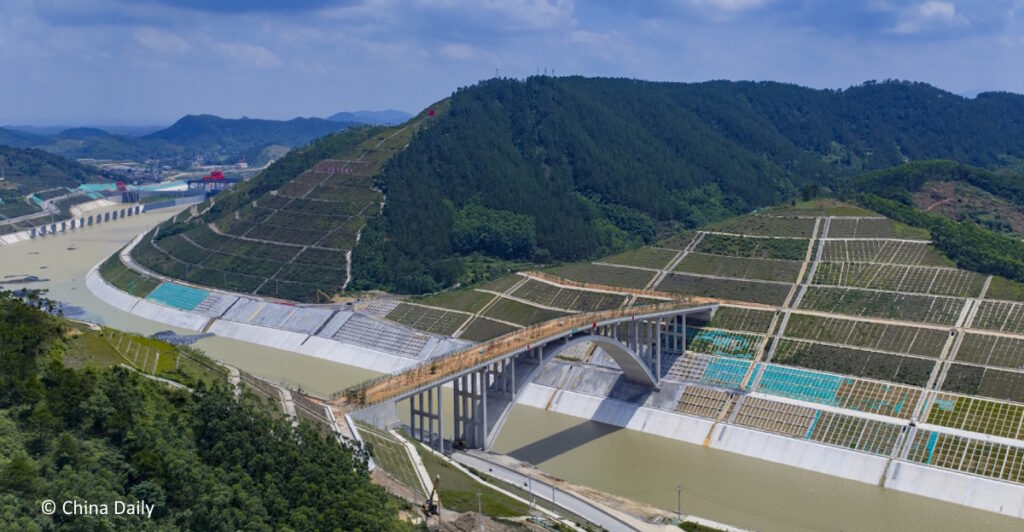
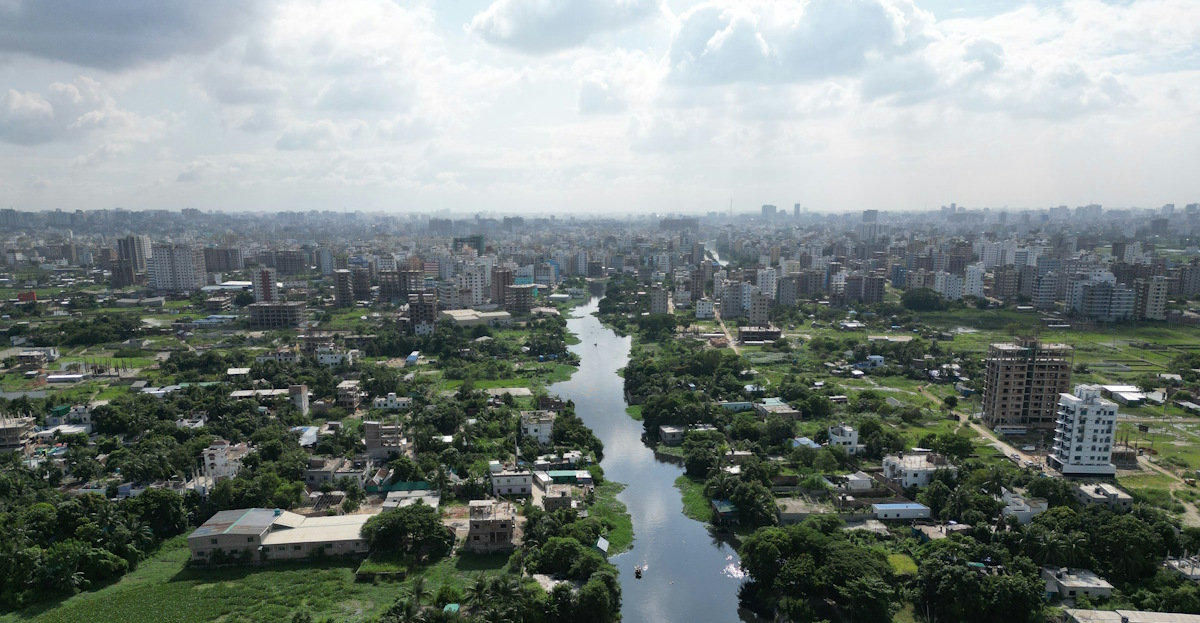
Another potential area of cooperation concerns the Teesta River Comprehensive Management and Restoration Project (TRCMRP). Estimated to cost around US$1 billion, the project aims to reduce flooding and riverbank erosion by improving the management of the Teesta River. The river is vital not only to Bangladesh’s agriculture but also to its urban centres and transport infrastructure.
Originally announced in 2016, the TRCMRP was initially expected to receive partial funding from India. However, disagreements between Bangladesh and the Indian state of West Bengal over the sharing of the river’s waters prevented that cooperation from moving forward.
China’s involvement in the project has therefore been perceived as a diplomatic setback for India. Nevertheless, while China may provide both technical expertise and financial support for the project’s implementation, Dhaka will still need to cooperate closely with New Delhi, since the Teesta originates in India and remains under Indian control upstream. Consequently, the infrastructure project alone will not resolve the broader issue of water sharing.
A Strategic Rapprochement with China
Taken together, these projects confirm that Tarique Rahman’s administration has deepened Bangladesh’s rapprochement with China. Nevertheless, Dhaka will need to ensure that it does not further increase its financial dependence on Beijing. Although China’s ambassador to Bangladesh, His Excellency Li Jiming, has stated that there is no “debt trap,” a report published by AidData found that nearly 17 percent of Bangladesh’s loans from China exhibited signs of financial distress.
Bangladesh should therefore proceed cautiously in its cooperation with China while maintaining an open channel with New Delhi. There is little doubt that China’s growing interest in the Bay of Bengal will encourage India to reinforce its “Look East” policy in order to preserve its influence over the development of its eastern neighbours.