by Sebastien GOULARD
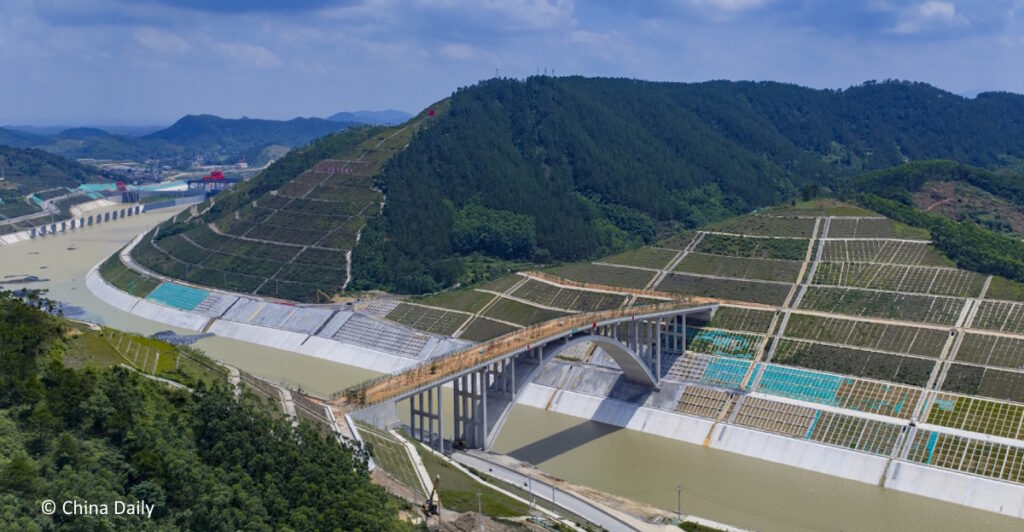
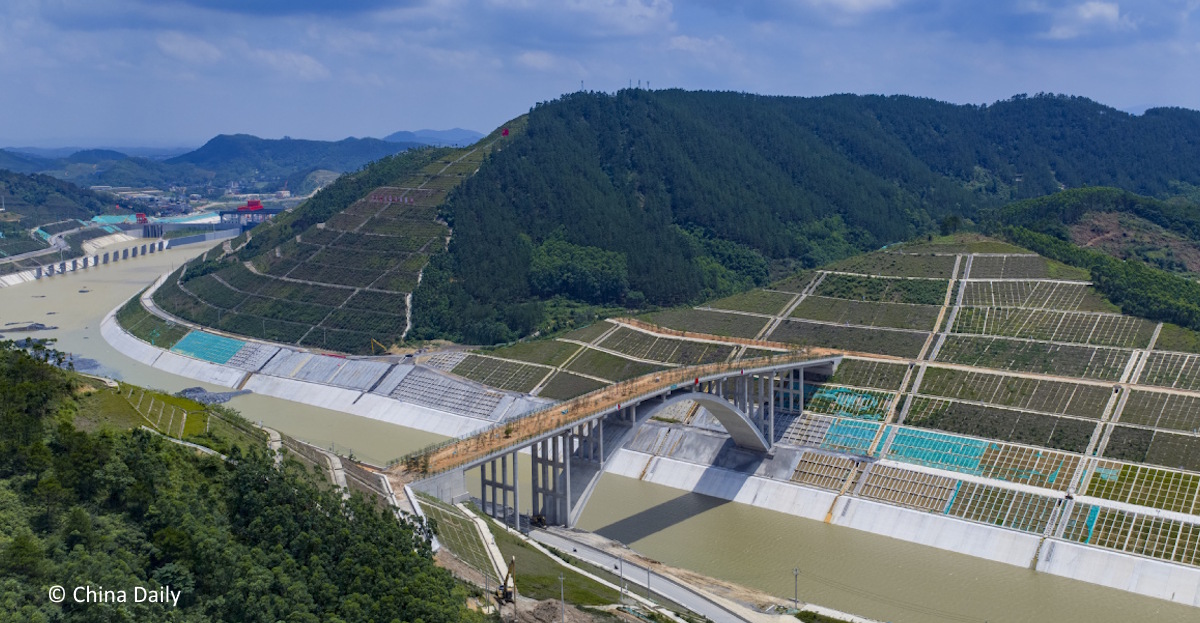
On September 16, the Pinglu Canal (平陆运河) was inaugurated in the Guangxi Zhuang Autonomous Region of China. This 134-kilometre-long canal connects the Xijiang River to the Beibu Gulf. The first canal linking a river to the sea to be built since the establishment of the People’s Republic of China in 1949, the Pinglu Canal will both help open up certain regions of southwestern China and strengthen trade between China and its Southeast Asian neighbours.
Key Figures
Construction of the Pinglu Canal (between Pingtang and Luwu) began in 2022. Three giant locks had to be built to regulate water levels and allow vessels with a capacity of 5,000 tonnes to use this new waterway.
The canal shortens the route from inland Guangxi to the sea by more than 500 kilometres, reducing logistics costs by up to 30% for transport between Guangxi and Southeast Asia. The cost of its construction is estimated at approximately RMB 72 billion (€9.5 billion), making it a major infrastructure project for Guangxi.
A Growth Driver for Guangxi and the Provinces of Southwestern China
The Guangxi Zhuang Autonomous Region has historically experienced weaker development than other coastal provinces, notably due to a lack of connectivity between its maritime façade and its hinterland. The Pinglu Canal is therefore expected to help address this situation. This is all the more significant as Guangxi’s economy is gradually shifting towards sectors linked to green energy and the transition, which are finding export opportunities. The provincial capital, Nanning, has thus become a major centre for electric vehicle production in recent years. The region is also capitalising on its proximity to Southeast Asian economies to develop new activities. Nanning hosts the China-ASEAN Expo every year.
More than just a canal, a genuine economic corridor is being developed around the Pinglu Canal Economic Belt. This area, located between Nanning and Qinzhou on the coast, is expected to attract both Chinese and foreign investors, including foreign investors from countries such as Malaysia, who are already present in the China-Malaysia Qinzhou Industrial Park. The development of this new area is considered a priority by the Guangxi provincial government, which has made it an objective of its 2026–2030 Five-Year Plan.
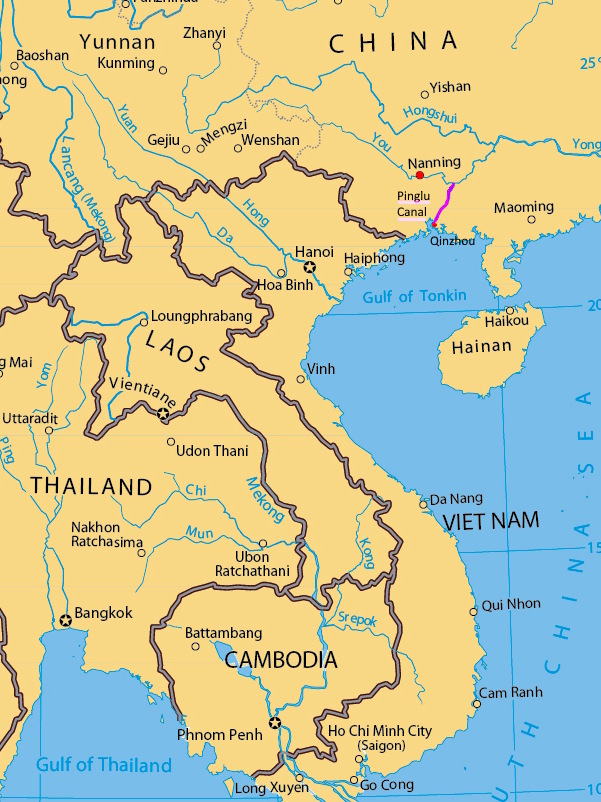
The role of Beibu Port as a hub is being further strengthened. With throughput reaching 32 million tonnes in July 2026, representing 5% growth over one year, Beibu is already experiencing significant development, driven by trade with Southeast Asia. The opening of the Pinglu Canal is expected to reinforce this trend and create new maritime routes between Guangxi and Asia.
Beyond Guangxi, the whole of southwestern China is expected to benefit from the canal, by reducing both distances and logistics costs to foreign markets. The project has thus been incorporated into the “New International Land-Sea Trade Corridor”, launched in 2019 and aimed at opening up China’s western provinces, namely Chongqing, Guizhou, Ningxia, Xinjiang, Gansu, Qinghai, Yunnan and Guangxi. This corridor also forms part of the “Belt and Road” Initiative.
The Pinglu Canal and China-ASEAN Relations
The construction of the canal is part of a broader dynamic of closer relations between China and Southeast Asia. China is ASEAN’s largest trading partner, and trade between the two blocs continues to grow. Signed in 2025, the CAFTA 3.0 protocol significantly modernised the free trade agreement linking China and ASEAN since 2002. China no longer imports only raw materials and agricultural products from Southeast Asia, but also a wide range of goods and components needed for its value chains. The Sino-American trade war initiated during Donald Trump’s first term, along with recent geopolitical tensions, is prompting Chinese companies to strengthen their presence in Southeast Asia. China is now the second-largest investor in Vietnam and Malaysia, and the third-largest in Indonesia. Chinese companies are working towards increasingly integrated production chains between China and ASEAN. This is particularly evident in the electric vehicle, lithium battery and photovoltaic panel sectors, which make up the “New Three” industries dominated by Chinese companies.
Within this strategy, the new Pinglu Canal plays an important role, as it will accelerate flows and create opportunities in previously less accessible regions of southern China.