by Shehzadi NAJAF
In the early hours of August 8, 2026, two undersea cables running through the Submarine Cable Protection Zone off Perth, Australia failed within a day of each other. A vessel was seen nearby, and industry experts called its movements suspicious. The incident barely registered as international news, yet it captured something larger about the state of global connectivity in 2026. The invisible infrastructure that carries almost all of the world’s data is no longer simply an engineering concern. It has become a contested strategic terrain.
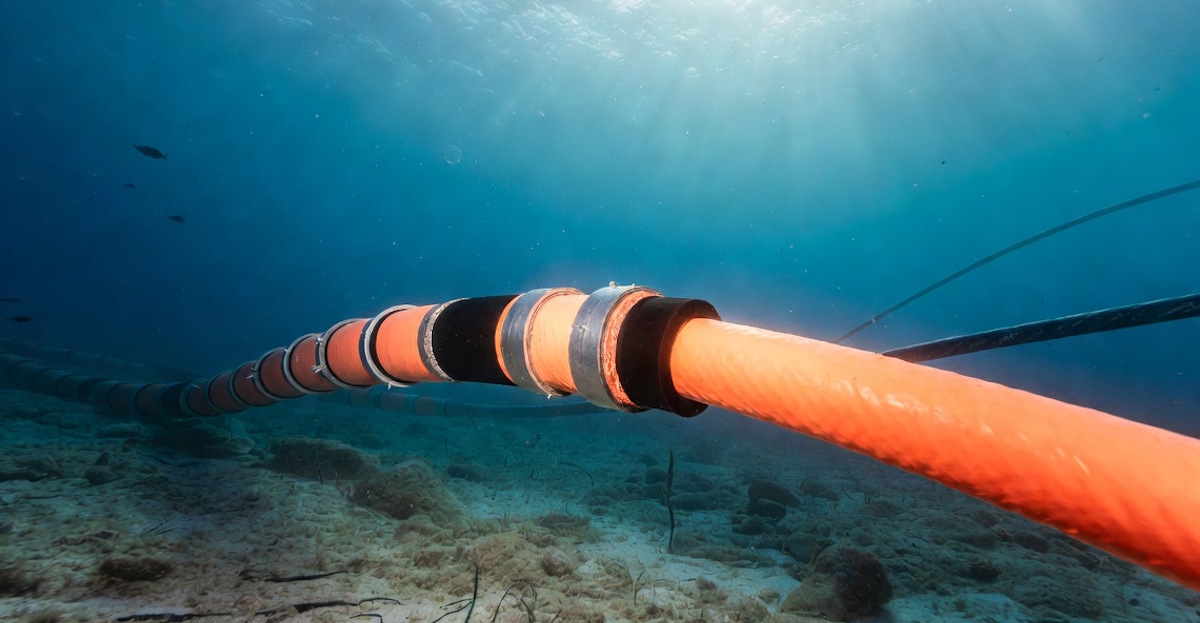
Roughly five hundred active submarine fiber optic cables lie across the ocean floor, and they carry more than ninety five percent of the world’s international communications, along with the overwhelming majority of global financial transactions. Satellites cannot replace this capacity. For all the attention given to space-based internet, the physical cable remains the backbone on which banking, diplomacy, cloud computing and ordinary daily communication depend. That dependence has made the cables an attractive target precisely because they are so difficult to defend.
The pattern is now familiar enough to have a name in policy circles, hybrid warfare below the waterline. In January 2026, Baltic states including Lithuania and Sweden raised their alert levels after a series of cable faults, prompting the Philippines, Taiwan, Australia, the United States and China to expand protection of their own undersea networks. Analysts researching the trend have pointed to Chinese vessels observed near Taiwanese cable routes as evidence that cutting cables offers a way to inflict real cost on an adversary without crossing the threshold into open conflict. In the Red Sea, cables including the Asia Africa Europe 1 system were damaged in 2024 after Houthi attacks on shipping, disrupting a quarter of the data traffic that normally flows between Asia, Europe and the Middle East. None of these incidents on its own proves a coordinated campaign, but taken together they describe a shift in how states think about undersea infrastructure, not as neutral plumbing, but as a lever.
What makes the threat harder to manage is the scarcity of the ships needed to fix a damaged cable. Repair depends on a small, aging global fleet of specialized vessels, and in contested waters that fleet all but disappears. As of May 2026, only a single repair ship, operated by the UAE based company eMarine, was active in the entire Persian Gulf. War risk insurance, naval escort requirements and slow permitting can turn what should be a routine repair into a disruption lasting for months. A temporary fault, in other words, can become a prolonged and deliberate disruption simply because nobody can reach it safely.
The consequences of this fragility are not evenly distributed, and that is where the story becomes personal for countries like Pakistan. Pakistan connects to the rest of the world through only six submarine cable systems, chiefly SEA ME WE 4, SEA ME WE 5, IMEWE and TW1, alongside the Pakistan China terrestrial Fiber link through Khunjerab. When any one of these develops a fault, the effect on ordinary users is immediate. In July 2026, a fault in the SEA ME WE 5 system forced the Pakistan Telecommunication Authority to reroute national traffic while repairs were carried out, following similar disruptions to the IMEWE and SEA ME WE 4 systems in preceding years. Compare this to the November 2024 cable cuts in the Baltic Sea, where Sweden, Lithuania, Finland and Germany experienced almost no visible disruption because their networks had enough redundant routes to absorb the loss. Redundancy, not good fortune, is what separates a minor inconvenience in Northern Europe from a national bandwidth crisis in South Asia. For countries with only a handful of landing points, cable security is not an abstract geopolitical question. It is a direct determinant of economic and informational sovereignty.
Governments and multilateral bodies have begun to respond, unevenly. The United States introduced the Strategic Subsea Cables Act in March 2026, a bipartisan bill aimed at countering what its drafters describe as shadow warfare against American infrastructure, including sanctions for anyone caught damaging cables deliberately. The European Union has funded Regional Cable Hubs under its Action Plan on Cable Security and Digital Europe Programme to monitor threats and speed up resilience efforts. Earlier multilateral statements, including the G7 digital ministers’ declaration and the 2024 Quad Joint Statement on the Security and Resilience of Undersea Cables, called for cooperation with developing and emerging economies to diversify routes and strengthen global connectivity. These are useful starting points, but they remain fragmented, dominated by wealthier states with the naval capacity and diplomatic weight to act, while countries most exposed to single points of failure are largely left to manage the fallout on their own.
If global connectivity is going to mean more than a shared vulnerability, the response has to move beyond national legislation and become genuinely collective. That means expanding the international fleet of repair vessels, guaranteeing safe access to cable routes even in contested waters, and helping lower income states diversify their landing points the way Northern Europe has. It also means recognizing, at the level of international law and diplomacy, that a cable cut off the coast of Perth or Karachi is not simply a technical fault. It is a test of whether the infrastructure binding the world together can be protected as a shared interest rather than fought over as a strategic prize.