by Sebastien GOULARD
During an official visit to Greenland on 6 and 7 September, European Commission President Ursula von der Leyen announced the strengthening of the partnership between the European Union and Greenland, including investments amounting to €200 million on the island in 2026 and 2027.
Greenland is a constituent country of the Kingdom of Denmark. It is not a member of the European Union, but is one of the Overseas Countries and Territories (OCTs) associated with the European Union. Denmark is responsible for Greenland’s security and foreign affairs. In the face of repeated threats of annexation made by the US President, the European Union and its Member States have decided to strengthen their relationship with the island so that its people can freely determine their own future.
A country developing its own development strategy
Greenland is currently economically dependent on Denmark. Under the Greenland Self-Government Act (2009), Denmark provides Greenland with DKK 3.4 billion every year (approximately €450 million); in addition, targeted investments are made in infrastructure and healthcare. More than half of the annual budget of the Greenlandic government comes from funding provided by Denmark.
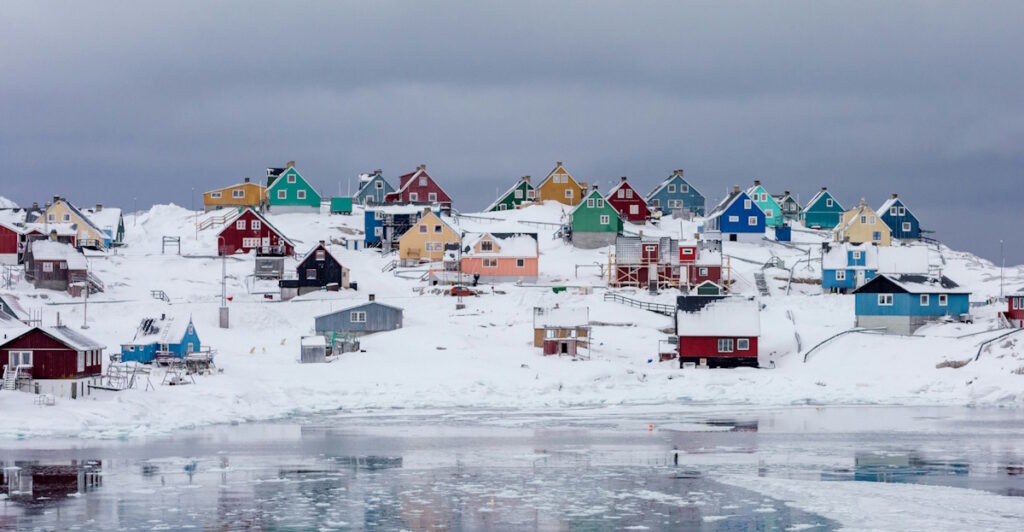
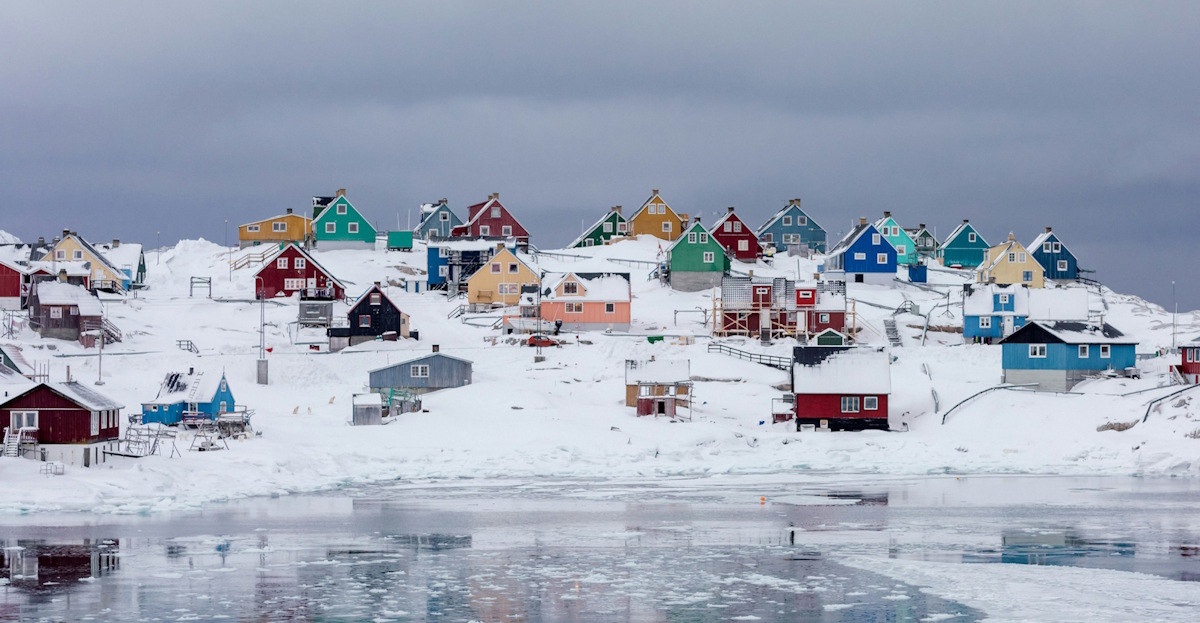
One of the challenges facing Greenland is its small population of 56,000, spread across towns and villages that are far from one another. Its capital, Nuuk, is home to more than one third of the island’s total population. However, due to a lack of roads and infrastructure, travelling from one place to another is difficult, making healthcare, education and economic development projects more challenging.
The Greenlandic economy remains dominated by fishing. Although the country has abundant natural resources, the Greenlandic government is reluctant to exploit them. In 2021, Greenland adopted legislation banning the issuance of new licences for oil and gas exploration in its territory in order to prioritise environmental protection. Under pressure from the United States, but also in an effort to accelerate its path towards independence, Greenland may reconsider this decision.
The American threat
On several occasions, President Donald Trump has stated his intention to incorporate Greenland into US territory. This is not the first time that the United States has expressed such a desire, as Washington had already proposed purchasing the island from Copenhagen at the end of the 19th century. The unpredictability of the current US President has raised concerns among Greenlanders and Europeans about Donald Trump’s statements.
The United States justifies its interest in Greenland by arguing that the territory would be unable to defend itself in the event of an attack by foreign powers, namely Russia and China, and that the presence of these countries in the western hemisphere of the Arctic would therefore pose a threat to US interests. Another argument put forward by Washington is that Denmark and its European partners have not invested enough in their defence to protect the Arctic, and that the United States would therefore be best placed to ensure Greenland’s security.
However, it is above all the resources beneath Greenland’s soil that are of interest to the United States. Greenland is rich in rare earth elements and critical minerals, resources that are essential to the energy transition and the development of artificial intelligence. In its race with China for technological innovation, the United States hopes to exploit Greenland’s strategic resources.
The European partnership
The American statements concerning Greenland have prompted Europeans to increase their presence on the island. In January 2026, the participation, albeit highly symbolic, of several European armed forces in the Danish exercise “Arctic Endurance” demonstrated European involvement in protecting the Arctic. In addition, Norway and France opened consulates in the capital, Nuuk, in 2026, while the United States announced the reopening of its own consulate in a larger building. Last March, France signed an agreement with Greenland to map the island’s mineral resources.
The partnership announced during the European Commission President’s visit covers several areas.
- First, it aims to strengthen connectivity between different parts of Greenland through the construction of subsea cables, such as the “Tusass Connect subsea cable” project.
- A second area concerns the development of renewable energy, particularly hydropower.
- The European Union and Greenland are also expected to cooperate on developing a value chain for strategic resources through the Amitsoq graphite deposit project and the Malmbjerg molybdenum mine. The objective is both to diversify the Greenlandic economy and to secure strategic resources for the European economy.
- Part of the European funding will be devoted to education and training projects so that young Greenlanders can be trained for the jobs of the future, notably through the Erasmus+ programme.
- Another area concerns the development of sustainable tourism in order, once again, to diversify the island’s economy.
- The European Union will also contribute to financing the modernisation of housing in Greenland.
- Finally, the European Union and Greenland have decided to increase their cooperation in the field of fisheries in order to coordinate stock management through the continuation of their sustainable fisheries partnership agreement.
An increase in European funding for Greenland was also announced for the next 2028–2034 budget, with funding expected to reach €530 million, compared with €225 million under the 2021–2027 budget.
The President of the European Commission also announced that the European Union is expected to unveil its new Arctic strategy in the autumn. Pressure from the United States, as well as from China, notably through the development of the new polar route, is pushing Europeans to increase their presence in the Arctic. Europeans may in particular reconsider their policy of non-exploitation of Arctic resources, which has been in place since 2021, although there is no consensus between protecting the environment and ensuring energy independence. There is little doubt that the European Union will continue to regard Greenland and the Arctic as key strategic regions for its security and will continue to support the people of Greenland.