by Nimra KHALIL
Friendships between nations are often measured in trade agreements, diplomatic commitments and economic partnerships. Rarely, however, do they find expression 400 kilometers above Earth. Pakistan and China are about to add precisely that dimension to a relationship spanning three-quarters of a century.
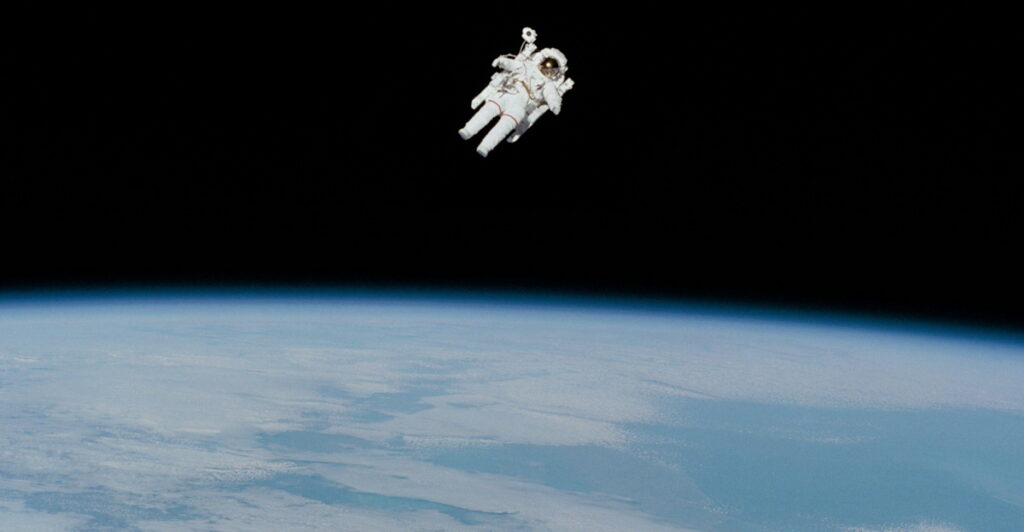
On November 25, China’s Shenzhou-24 spacecraft, meaning “Divine Vessel,” is scheduled to lift off from the Gobi Desert. Among its crew will be Muhammad Zeeshan Ali, a 40-year-old Pakistani fighter pilot and engineer, poised to become the first Pakistani to enter Earth orbit and the first foreign astronaut to visit China’s Tiangong space station. Describing the journey as carrying the aspirations of 250 million Pakistanis, Ali embodies the human dimension of this historic undertaking.
Yet behind this extraordinary flight lies an equally fascinating story of scientific perseverance, geopolitical transformation and diplomatic trust. Why did China establish its own space station? What made Pakistan its first international astronaut partner? And what possibilities does this collaboration unlock?
The Birth of the Heavenly Palace
The origins of Tiangong, meaning “Heavenly Palace,” lie at the intersection of scientific ambition and international politics. China remained outside the International Space Station (ISS) partnership, while the 2011 Wolf Amendment restricted NASA’s bilateral cooperation with Beijing.
China, however, had already charted an independent course. Its three-stage human spaceflight strategy, introduced in 1992, envisioned mastering crewed spaceflight, developing orbital docking capabilities, and establishing a permanent space station. In 2003, Yang Liwei became China’s first astronaut, followed by experimental laboratories Tiangong-1 and Tiangong-2. Between 2021 and 2022, Beijing assembled its permanent orbital station.
What makes this achievement particularly remarkable is China’s transformation of technological independence into international scientific opportunity. Through its partnership with the United Nations Office for Outer Space Affairs, China selected nine research projects involving institutions from 17 countries in 2019.
With the ISS approaching its anticipated retirement around 2030, Tiangong’s importance is growing. Pakistan’s participation brings a new dimension to Beijing’s vision of international space cooperation.
Why Pakistan?
China’s selection of Pakistan reflects a relationship that extends well beyond conventional diplomacy. Since establishing diplomatic relations in 1951, the two countries have expanded cooperation across defense, infrastructure, education, telecommunications, and scientific research. While the China-Pakistan Economic Corridor dominates discussions of bilateral relations, space cooperation has quietly developed into another important pillar of the partnership.
In February 2025, Pakistan’s Space and Upper Atmosphere Research Commission (SUPARCO) and the China Manned Space Agency (CMSA) signed an astronaut cooperation agreement, establishing a framework for Pakistani participation in Chinese human spaceflight missions.
The development also carries wider diplomatic significance. Although European astronauts previously trained alongside their Chinese counterparts, the European Space Agency indicated in 2023 that it had no immediate plans to send astronauts to Tiangong.
Pakistan’s participation, coinciding with the 75th anniversary of bilateral diplomatic relations, consequently represents both a milestone in their longstanding friendship and a new chapter in China’s international space engagement.
From the Cockpit to the Cosmos
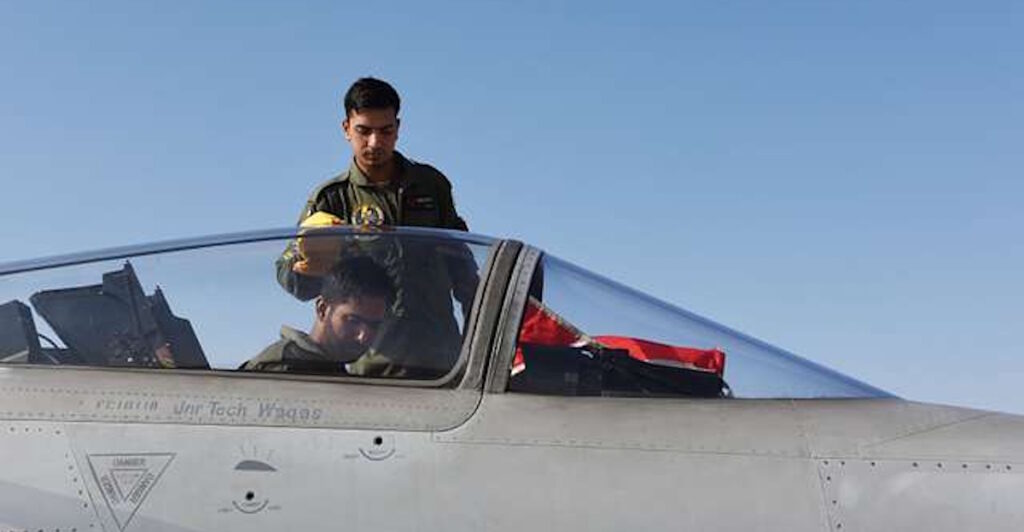
Following a rigorous three-stage selection process involving medical, psychological, physical, and technical assessments, two Pakistan Air Force pilots, Muhammad Zeeshan Ali and Khurram Daud, emerged as astronaut candidates in April 2026. Their preparation included centrifuge exercises, spacecraft operations, emergency procedures, and survival training. However, one of their most interesting challenges had little to do with flying: learning Mandarin.
According to Nature, Ali spent approximately seven months preparing for the mission and addressed journalists in Mandarin during the pre-launch press conference. While Ali secured a place aboard Shenzhou-24, Daud’s training also contributes valuable expertise to Pakistan’s future human spaceflight endeavors.
Accompanied by Chinese astronauts Tang Hongbo and Wu Yi, Ali will spend approximately seven days aboard Tiangong before returning aboard Shenzhou-23. Orbiting Earth roughly every 90 minutes, he could witness 16 sunrises and sunsets within a single day.
Science Beyond Gravity
Ali’s responsibilities as a payload specialist extend beyond the symbolic significance of his journey. His mission involves four collaborative scientific projects, including research into biotechnology, materials science, and photosynthetic microorganisms.
The latter holds particular significance for future space exploration. Scientists are investigating how microorganisms could generate oxygen and recycle carbon dioxide under microgravity, potentially contributing to sustainable life-support systems for lunar habitats and extended space missions. Other experiments could advance understanding of biological processes and material behavior under conditions unavailable in conventional laboratories. Importantly, these investigations may continue for months after Ali’s return, establishing a sustained connection between Pakistani research institutions and China’s orbital laboratory.
A Dream Six Decades in the Making
Pakistan’s human spaceflight milestone reconnects the country with its pioneering scientific history. In 1961, Pakistan established SUPARCO with the involvement of physicist and future Nobel laureate Dr. Abdus Salam. On June 7, 1962, the country launched Rehbar-I from Sonmiani, becoming a pioneer of atmospheric rocket research in South Asia.
Decades later, Pakistan extended its scientific reach beyond Earth when iCube-Qamar entered lunar orbit aboard China’s Chang’e-6 mission in May 2024. Developed through collaboration between Pakistani and Chinese institutions, the satellite demonstrated the potential of university-led space research.
The partnership is now moving toward another frontier. Pakistan plans to send a lunar rover aboard China’s Chang’e-8 mission around 2028, creating opportunities in robotics, autonomous systems, and lunar surface exploration. These developments complement Beijing’s ambitions for a crewed lunar landing by 2030 and an International Lunar Research Station.
Beyond the Launchpad
Shenzhou-24 illustrates how scientific diplomacy can extend opportunities for developing countries to participate in space exploration. Through astronaut training, joint research, and technological collaboration, Pakistan and China are demonstrating how diplomatic trust can translate into scientific progress. For Pakistan, the benefits could extend to education, engineering, biotechnology, satellite-based flood monitoring, agricultural planning, and disaster preparedness. Perhaps the mission’s most enduring influence, however, will emerge in classrooms across Pakistan.
More than six decades after Rehbar-I rose above Pakistan’s coastline, a Pakistani astronaut is preparing to carry that same scientific curiosity into Earth orbit. A friendship once celebrated through the mountains of the Karakoram, highways, and economic corridors is now reaching beyond the atmosphere. The lasting legacy of the Divine Vessel may ultimately lie in the generation of Pakistani children who look toward the night sky and discover that space is no longer somebody else’s frontier.