by Sebastien GOULARD
On August 12, 2026, South Korea unveiled a new industrial strategy whose ambitions stand out. While the media focused primarily on the lunar landing project planned for 2030, the other projects are equally indicative of the country’s growing capabilities and its increasingly assertive position in an uncertain geopolitical environment.
The “7 SEEDS”
The 7 SEEDS programme (Strategic Emerging Engines for Disruptive Innovation) aims to consolidate South Korea’s position as an innovative power. The strategy identifies seven sectors in which South Korea must achieve a high degree of autonomy. By introducing this programme, President Lee Jae-myung and his government seek to prepare South Korea for the challenges posed by economic and technological transformation.
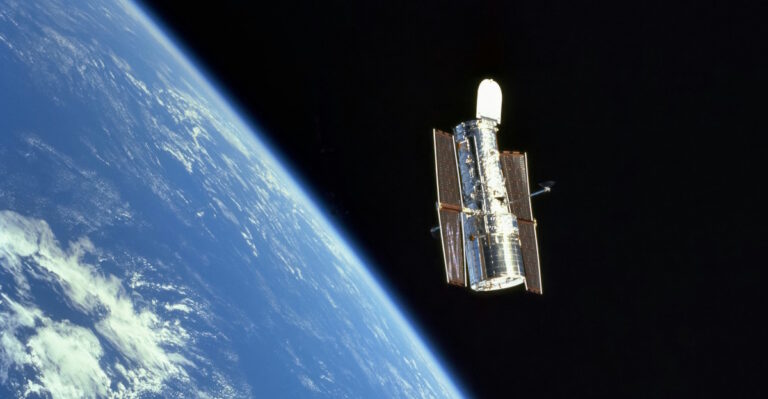
In the aerospace sector, South Korea is aiming for its first lunar landing by 2030, which would see it join the very small group of powers that have achieved this objective. An exploration rover is expected to be launched aboard the Nuri rocket, which was designed and developed domestically. Seoul also plans to deploy a satellite network of between 128 and 512 satellites by 2035. This network would both safeguard South Korea’s sovereignty in telecommunications and security and enable the deployment of 6G technology across the country.
South Korea also intends to develop its nuclear industry, notably by deploying low-power small modular reactors (SMRs), while investing in “artificial sun” technology, with initial commercialisation expected from 2038 onwards.
Seoul also aims to become a major player in renewable energy. Fossil fuels currently continue to dominate the country’s energy consumption, but South Korea aims to achieve carbon neutrality by 2050. This will require massive investment not only in nuclear power, but also in solar and wind energy, as well as hydrogen. South Korea imports nearly 60% of its oil and gas from the Persian Gulf and almost 20% of its coal from Russia. Developing renewable energy sources will help reduce its dependence on regions facing geopolitical tensions.
South Korea also hopes to become a major power in quantum technologies. It plans to bring a 100-qubit quantum computer into operation by 2029, while also developing its domestic quantum-chip manufacturing capabilities.
Another of the seven major projects announced by the South Korean government is the development of biotechnology, with two objectives: first, to establish an AI-biotechnology infrastructure by 2030; and second, to commercialise a brain-computer interface by 2035.
Finally, Seoul aims to secure access to critical resources by strengthening its supply chains, as the achievement of all the objectives South Korea has set itself will depend to a large extent on its ability to secure rare earth elements and other strategic resources. Earlier this year, the country had already unveiled its roadmap for securing access to rare earths, with the aim of diversifying its sources of supply through strategic partnerships and thereby reducing its dependence on China.
This plan is extremely ambitious, with an estimated cost of nearly $7.1 billion, but these investments are expected to help prepare South Korea for a major economic transition.
The Demographic Challenge
According to Bae Kyung-hoon, the Minister of Science, the plan aims “to build a South Korea that no one will be able to compete with in 10 or 20 years.” South Korea is facing several challenges that these new projects are intended to address.
First, at the societal level, the country is confronted with demographic decline. According to United Nations projections, South Korea could lose 6 million inhabitants by 2050. Although its birth rate has been increasing for several months, it remains insufficient to ensure population replacement. South Korea must therefore take steps now to secure its future development despite an ageing population.
The projects developed under the “7 SEEDS” strategy are intended to enable South Korea to maintain, and potentially strengthen, its productivity at the global level.
A More Fragile Geopolitical Context
This development strategy has been announced at a time when South Korea is facing the possibility of a deterioration in its relations with the United States. Under President Donald Trump, the US military commitment to South Korea has become more uncertain. As early as 2018, during his first term in office, Donald Trump decided to cancel certain joint military exercises between the US and South Korean armed forces; this August, he sought once again to reduce the scope of joint exercises. He has also publicly questioned the continued presence of US troops in South Korea, arguing that it costs the United States too much. Even more concerning for South Koreans, the US President appears keen to meet the North Korean leader again despite the launch of several ballistic missiles in August.
According to a survey conducted by the Pew Research Center, for the first time in twenty years, a majority of South Koreans have an unfavourable view of the United States.
Against this backdrop, South Korea is seeking to become more autonomous in its industrial strategy, particularly in the event that it were to lose access to certain strategic technologies or resources. This also involves diversifying its partnerships with Southeast Asian countries, establishing a stronger presence in Europe, and developing new, more stable relations with China, as illustrated by Chinese Foreign Minister Wang Yi’s recent visit to Seoul on August 20.