by Mirza Abdul Aleem BAIG
The twenty-first century will not be defined merely by armies or alliances; it will be defined by chokepoints and corridors. The great contest unfolding before us is no longer only about territory or ideology – it is about who designs, controls, and secures the arteries of global trade and commerce.
From China’s Belt and Road Initiative (BRI) to the India-Middle East-Europe Economic Corridor (IMEC), the future of global connectivity and influence is increasingly being shaped through infrastructure, connectivity, geo-economics and strategic geography.
What appears today as an economic competition may, in reality, become the central geopolitical struggle of the coming decades. The emerging contest between China’s Belt and Road Initiative (BRI) and the India-Middle East-Europe Economic Corridor (IMEC) is no longer an economic competition over trade routes. It is a geopolitical struggle over the future command of global connectivity itself.
What is unfolding across the Indo-Pacific, the Gulf, and Eurasia is the strategic weaponization of infrastructure, supply chains, ports, and energy corridors in an era where economic dependence has become both leverage and vulnerability.
Beneath the language of development and cooperation lies a far harsher reality. The power that controls the world’s critical corridors will shape the emerging world order, while those unable to secure their networks will face strategic compression, economic exposure, and gradual geopolitical decline.
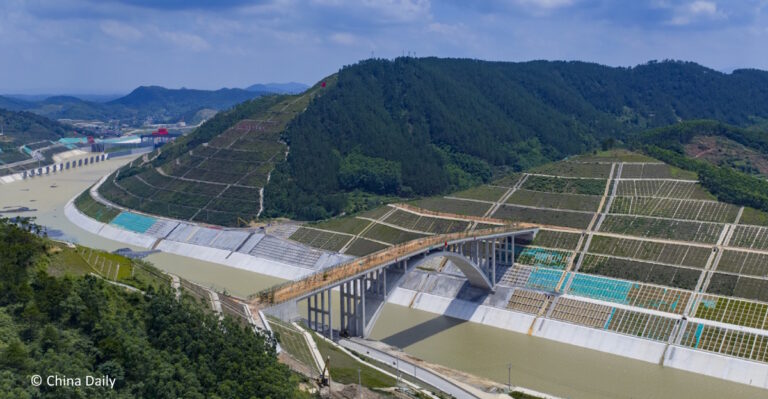
For nearly a decade, the BRI stood as the most ambitious connectivity vision in modern history. Through ports, highways, railways, and energy projects stretching across Asia, Africa, and Europe, Beijing sought not only economic expansion but strategic depth.
The logic was clear; if China could anchor itself at the center of global trade routes, it could gradually reshape the architecture of international power itself. In many respects, the BRI succeeded. It expanded Chinese influence across the developing world, increased Beijing’s access to markets and resources, and positioned China as an indispensable economic actor for dozens of states.
For many countries in the Global South, Chinese financing appeared to offer an alternative to Western conditionality and institutional rigidity. Infrastructure arrived faster, funding appeared larger, and political interference seemed comparatively limited. Yet the very scale of the BRI also exposed its vulnerabilities.
In light of recent events, the current geopolitical environment has revealed that connectivity without security becomes fragile. Maritime chokepoints, regional instability, debt concerns, and rising geopolitical polarization have complicated China’s grand strategy.
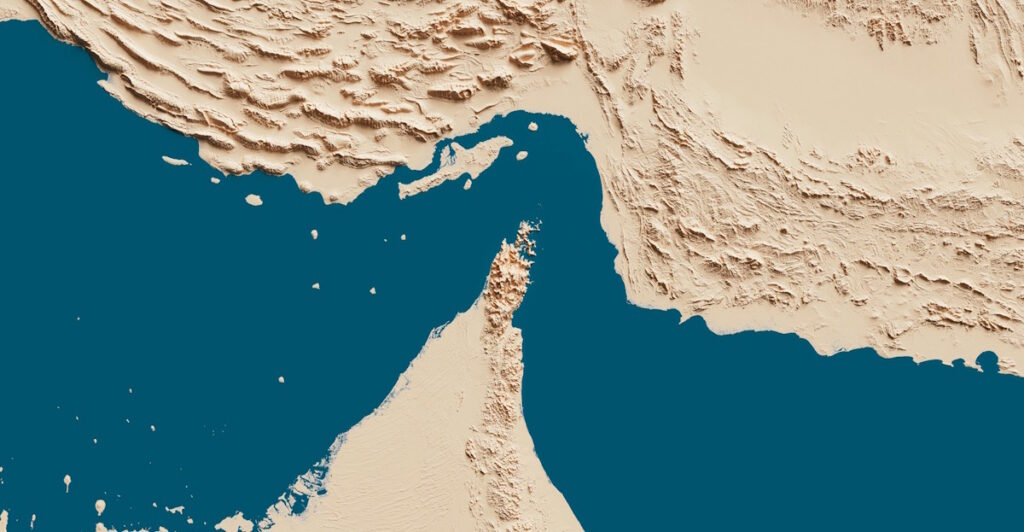
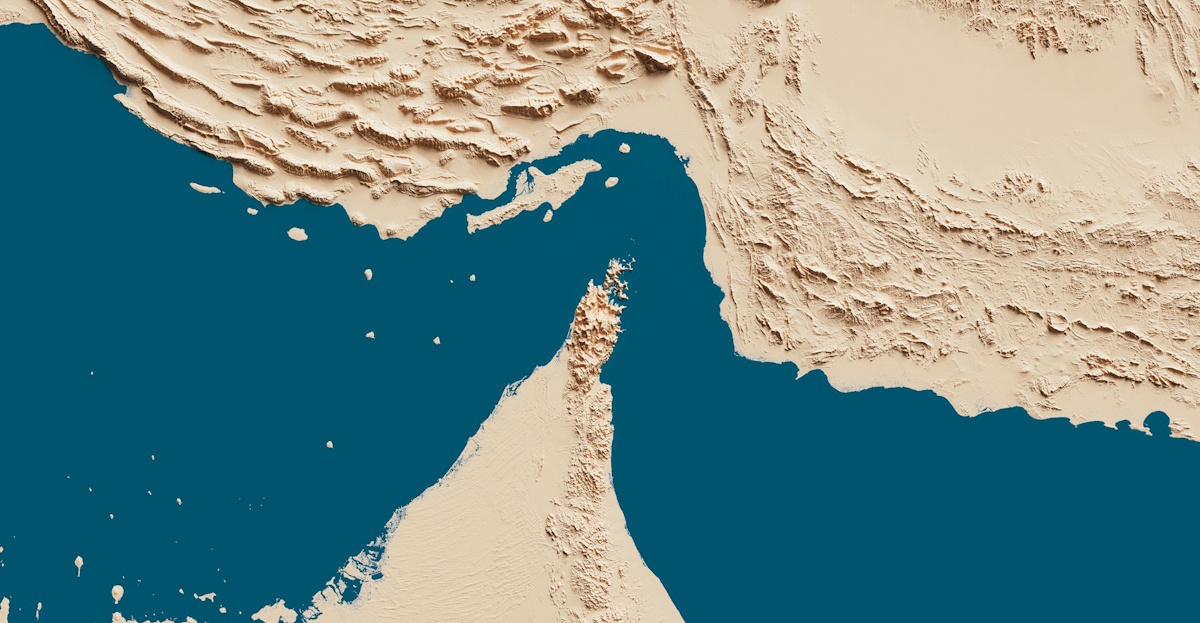
The Strait of Hormuz crisis demonstrated how easily trade networks can become pressure points. Disruptions in shipping routes immediately reverberated across China’s economy, exposing Beijing’s dependence on external energy corridors and vulnerable maritime lifelines.
This is the strategic paradox facing China today. The BRI was designed to reduce vulnerability through connectivity, but the more interconnected China became, the more exposed its economic system grew to geopolitical disruption. Beijing’s rise, built upon uninterrupted global flows, now faces a world where those flows are increasingly contested.
It is within this shifting landscape that IMEC has emerged, not simply as an infrastructure project, but as a geopolitical counter-framework. Unlike the BRI, which was conceived during an era of expanding globalization, IMEC is being shaped in an era of strategic fragmentation. Its design reflects a different logic; trusted corridors over unrestricted globalization, strategic alignment over open-ended expansion, and resilience over scale alone.
Backed by India, Gulf partners, Europe and the United States, IMEC is not merely competing with China economically; it is attempting to redefine the political foundations of connectivity itself. This distinction matters enormously for the Global South. Many developing states are no longer seeking infrastructure at any cost. They are increasingly weighing sustainability, diversification, political flexibility, and long-term strategic balance.
The experience of debt pressures, stalled projects, and geopolitical exposure has led several countries to reassess how infrastructure partnerships shape sovereignty. IMEC enters this environment with an important advantage; it is being presented not as a singular sphere of influence, but as a collaborative corridor linking multiple strategic regions. This creates the perception, whether fully accurate or not, of shared ownership rather than centralized dependency.
Strategically, India’s role within this framework is especially significant. For decades, India remained economically overshadowed by China’s manufacturing dominance and infrastructure expansion. But the strategic environment is changing. As tensions between Washington and Beijing intensify, and as global supply chains seek alternatives to China-centric production networks, India finds itself in an increasingly advantageous position.
Amidst intensifying economic rivalry and underscoring India’s rise as a serious competitor, geopolitical comparison between the Chinese and Indian economic trajectories is now entering a new phase. Fundamentally, China still retains enormous structural advantages, industrial capacity, infrastructure depth, export ecosystems, and technological scale.
However, China’s economy is also entering a period of strategic compression; slower growth, demographic pressures, rising labor costs, external trade restrictions, and geopolitical containment are gradually constraining the momentum that once appeared unstoppable.
More importantly, China now faces a dual burden; sustaining economic growth while simultaneously defending its global connectivity architecture under mounting geopolitical pressure. This is not merely an economic challenge; it is a strategic overstretch problem.
India, by contrast, benefits from a different set of conditions. It is increasingly viewed as a diversification destination rather than a strategic threat. Western capital seeks alternatives to Chinese manufacturing dependence. Gulf States view India as both a market and a long-term strategic partner – “Energy Diplomacy through Economic Lenses”.
IMEC further strengthens India’s position by transforming it from a regional actor into a central node within an emerging transcontinental framework. For the modern analyst, in strategic war-gaming terms, the contrast is becoming sharper.
China’s model depends on maintaining vast external flows under increasingly hostile geopolitical conditions. India’s model benefits from being integrated into a balancing coalition that actively seeks to reduce dependence on China. One system is defending accumulated scale; the other is benefiting from strategic redistribution.
Admittedly, this does not mean India will replace China in the near future. Such assumptions are simplistic and premature. China’s industrial ecosystem remains unmatched in many sectors, and its economic depth cannot be replicated quickly. But the future competition may not be about outright replacement, it may instead revolve around relative resilience.
In reality, the critical question for the coming decade is not whether China collapses or India overtakes it completely. The real question is which model proves more adaptable in an era defined by fragmentation, supply-chain securitization, and geopolitical rivalry.
In this context, IMEC possesses several strategic advantages. Firstly, it aligns with the broader geopolitical interests of multiple major powers simultaneously. Secondly, it benefits from the perception of lower political risk compared to regions heavily exposed to confrontation. Thirdly, it integrates maritime, rail, digital, and energy connectivity into a wider strategic framework that complements emerging Western and Gulf priorities.
From a South-South cooperation perspective, for the Global South, this creates a compelling proposition. In a shifting global landscape, to avoid over-dependence, countries are increasingly seeking multipolar partnerships rather than singular dependency. IMEC’s collaborative structure may therefore appear more politically flexible and strategically sustainable over time.
Despite its evolution towards ‘soft’ infrastructure, the BRI is unlikely to disappear. China will continue adapting its strategy through smaller projects, technological integration, digital infrastructure, and regional energy corridors. Beijing understands that connectivity remains central to its global influence.
As a result of shifting alliances, the contest between BRI and IMEC is therefore not a temporary rivalry. It is the opening phase of a much longer struggle over the infrastructure of global order itself. More than just a market event, what makes this competition historically significant is that it transcends economics.
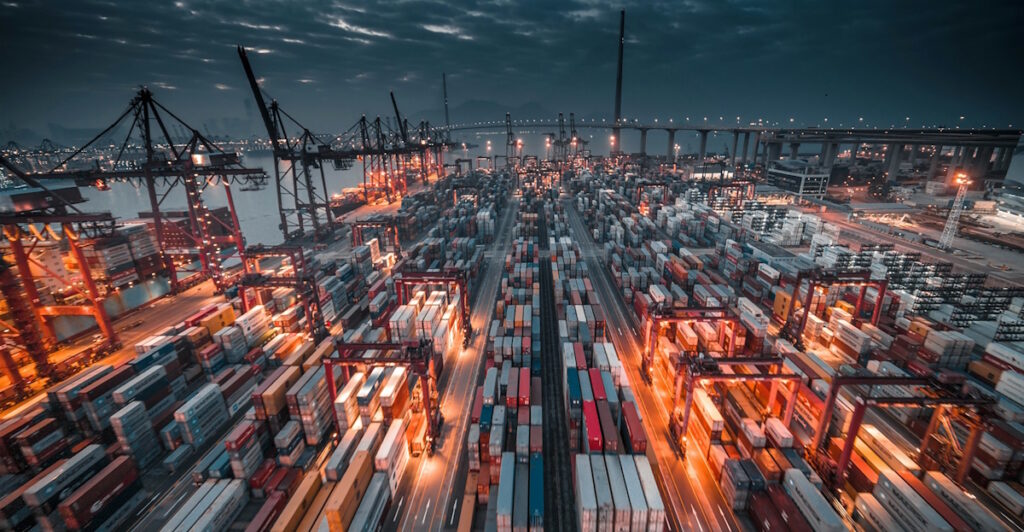
Corridors are becoming instruments of power projection, alliance formation, and strategic influence. Ports are no longer merely commercial assets; they are geopolitical footholds. Supply chains are no longer neutral systems; they are components of national security.
As a new driving force, the Global South now stands at the center of this transformation – not as a passive observer, but as the primary terrain upon which these competing visions will unfold. Ultimately the therein lies the defining lesson of our time.
In light of these emerging realities, considering all the factors, the future of emerging world order will not be shaped solely by military superiority or diplomatic declarations. It will be shaped by whose networks remain functional under pressure, whose corridors remain trusted during crisis, and whose model of connectivity offers both prosperity and strategic resilience in an increasingly uncertain world and global disorder.