
by Shehzadi NAJAF
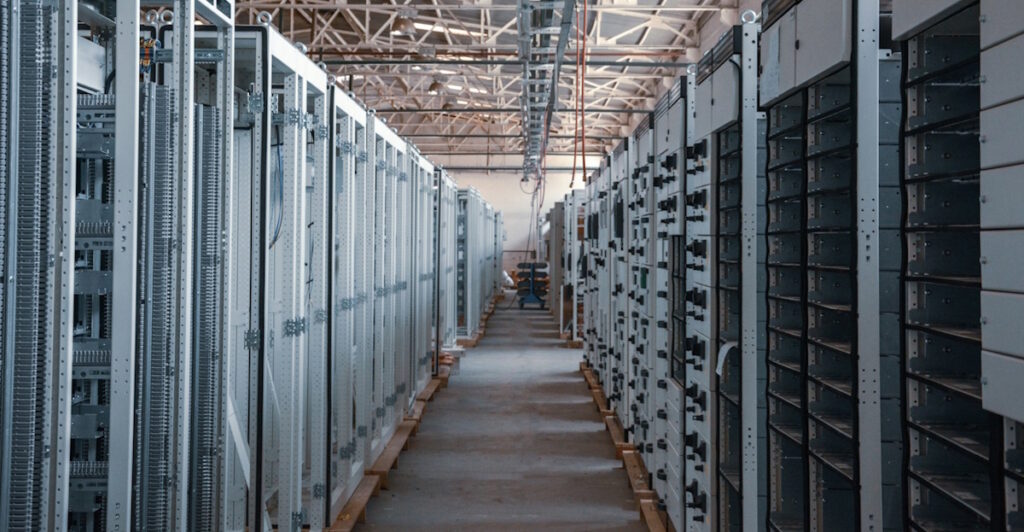
In the second week of October, drones struck data centers belonging to the Russian technology company Yandex. Almaty, Bishkek and Tashkent were nowhere near the blasts. Yet within hours, taxi, delivery and other digital services stopped working in Kazakhstan, Kyrgyzstan and Uzbekistan. Nobody in those cities was a target. They were simply plugged into something that was.
That is the quiet lesson of the episode, and it points at an old structural problem. Central Asia is landlocked, and its internet has long run through one neighbor. The Internet Society describes the region as heavily dependent on connectivity from Russia, with backbone fiber interconnected with Russian networks. In Kazakhstan, the biggest economy in the region, more than 90 percent of internet traffic and roughly 80 percent of international bandwidth still rely on Russian operators. The only other real option is a long detour south through the subsea cables of the Red Sea and the Mediterranean, a route that has its own troubles. The region is connected, in other words, but mostly through a single door.
A week after the strikes, a second door opened. On October 15, Kazakhstan and Azerbaijan commissioned a 380 kilometer cable under the Caspian Sea between Aktau and Sumgayit, built with backing from the European Union’s Global Gateway program. Rated for 400 terabits per second, it carries Central Asian data west through Azerbaijan, Georgia and Turkey toward Europe without touching Russian territory. The timing looks dramatic, but the cable was not a reaction. Leaders in Astana and Baku were already talking about a late 2026 finish a year ago. The drones only made the case for it impossible to ignore.
Brussels is now trying to build around the cable. On November 9, at a connectivity meeting in Chișinău, the European Commission announced ten statements of intent meant to mobilize up to €623 million for 5G networks, satellite links, data centers and AI across the Middle Corridor region. A European Commissioner argued earlier this year that reliable routes between Europe and Asia give everyone along them more options and less risk of blackmail. That is a pointed way of describing a digital road that is meant, among other things, to be hard to switch off.
Why does a fiber cable belong in a story about a trade route? Because the freight is only half the picture. Cargo along these routes is rising fast, while much of the physical infrastructure is old and outdated, according to the EU’s own enlargement commissioner. Modern rail signaling, customs checks and logistics all run on real time data, so a train that crosses three borders is only as dependable as the network telling each border what is coming. The corridor needs a digital spine as much as it needs track.
It is worth reading the fine print, though. The €623 million is a target for mobilized investment, not money already spent. And the package does not even pay for the big cables: analysts note that the Caspian, Black Sea and Kardesa systems are financed through separate energy, multilateral or private operator tracks. What Europe is really funding is the layer around the cables, the networks, satellites and servers that make the fiber useful. That matters, because capacity without a safe route to the outside world goes only so far. As one Jamestown analysis put it, new Central Asian data center capacity would still depend on Russian controlled networks for international transit without a sovereign east west fiber route.
Nor is Europe the only builder. The Caspian cable itself, according to regional reporting, was supplied by a Chinese manufacturer using Japanese fiber and Western terminal equipment, a small piece of evidence that nobody in this story is working alone. Tajikistan, for its part, responded to the Yandex outages by opening a fiber line over the Pamir Mountains to Beijing. In Kazakhstan, regulators saw the outages as fresh grounds for demanding that computing serving Kazakh users be moved inside the country. Diversifying is not the same as becoming independent. It means choosing which partners to rely on, and spreading the bet.
That, more than any single cable, is the argument worth carrying out of Central Asia. We tend to measure connectivity by how many people are online. We rarely ask how many doors lead out. A country with one door is exposed to whatever happens on the other side of it, whether that is a drone strike, a sanction or a technical fault. Pakistan knows the arithmetic well. It reaches the world through only six submarine cable systems, and every fault on one of them is felt in homes and offices within hours. The Caspian story is a reminder that more options can be built, though only slowly, expensively and with partners who have interests of their own.
Europe and Central Asia are not building a wall. They are building a second road. The test of whether it works will not be the next ribbon cutting. It will be the next bad night, when something far away goes dark, and the taxis in Almaty keep running.