by Sebastien GOULARD
At the beginning of May, all of Europe had its eyes on Armenia. The Caucasian country has expressed its desire to anchor itself more firmly in Europe and reduce its dependence on Russia. On May 4, the summit of the European Political Community took place in Yerevan, bringing together heads of state and government from across Europe and Canada. This meeting was followed by the first “European Union–Armenia” summit. On this occasion, the EU–Armenia Connectivity Partnership was signed by European Commission President Ursula von der Leyen, President of the European Council António Costa, and Armenian Prime Minister Nikol Pashinyan.
The Priorities of the EU–Armenia Connectivity Partnership
This agreement marks an important milestone in relations between the European Union and Armenia. During the meeting, Prime Minister Pashinyan stated that he would be delighted if the European Union were one day to welcome Armenia as a member. Although no formal application for membership has yet been submitted, this statement reflects Armenia’s growing interest in joining the European Union in order to secure its prosperity. The declaration was taken very seriously by the Russian President, who suggested that the Armenian authorities organize a referendum on Armenia’s potential accession to the European Union. Behind this statement lies a Russian warning. Russian interests remain deeply embedded in Armenia, and several strategic sectors, – including energy and rail transport-, still partly depend on Russian companies. Yerevan will first need to clarify its positions and develop new partnerships, particularly in the modernization of its nuclear sector, outside of Russia before seriously considering an application to join the European Union.
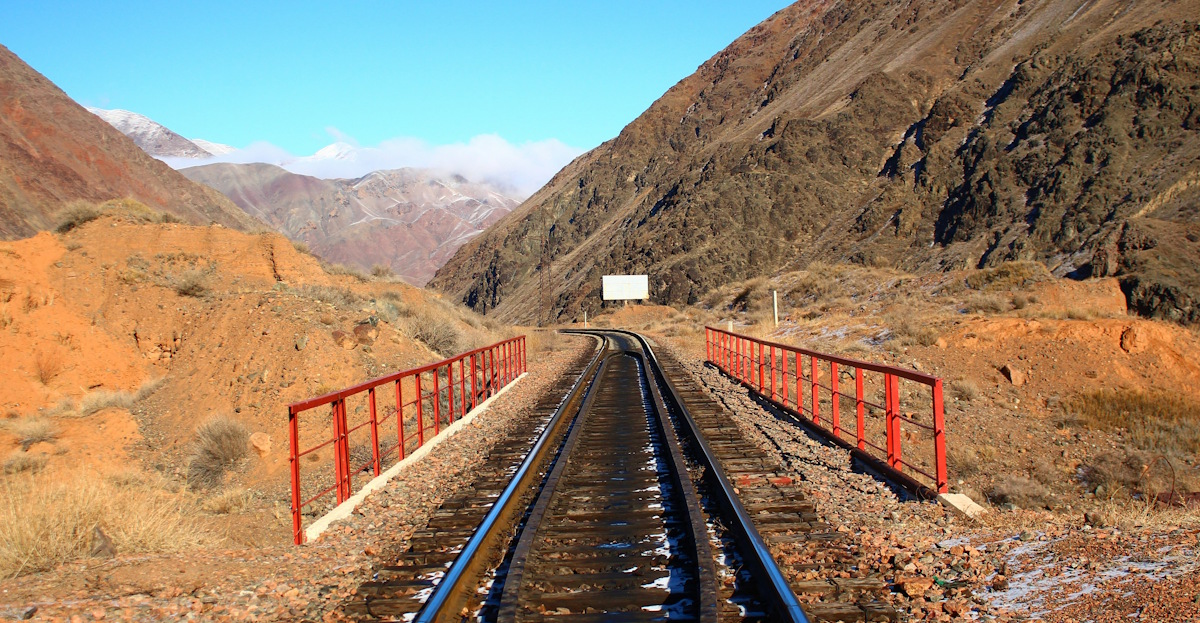
The purpose of this connectivity partnership is to integrate Armenia into the broader European dynamic. The agreement is built around three priorities. The first is to better connect Armenia to the European Union’s transport networks, particularly the Trans-Caspian Transport Corridor, which is expected to become a major trade route between the EU and the countries of Central and East Asia. Through this partnership, the EU will be able to identify and finance feasibility studies for new transport infrastructure projects in Armenia.
The second pillar concerns energy. Armenia is seeking to become less dependent on its neighbors for energy access. As Prime Minister Nikol Pashinyan stated during the meeting, Armenia has significant potential for solar energy development. Armenia’s energy sector development program sets a target of 15% solar energy by 2040. To achieve this, Armenia intends to attract new investors, particularly to increase its storage capacities.
Finally, the third component of the EU–Armenia connectivity agreement covers digital technologies and innovation. Armenia must be able to integrate into the European digital environment, notably to facilitate trade exchanges. Furthermore, Armenia has ambitions in the semiconductor sector, as was highlighted during the Yerevan Dialogue 2026. The European Union and Armenia could also cooperate in the development of rare earth extraction, as some studies suggest that Armenia’s subsoil may be rich in resources, enabling the EU to diversify its access to certain critical minerals.
This strategic partnership should also be accompanied by various commercial, economic, and societal exchanges between the EU and Armenia. The strategy aligns with the European Union’s Global Gateway initiative launched in 2021, as well as with the EU’s broader strategy for the South Caucasus. The agreement complements the €270 million Resilience and Growth Plan for Armenia (2024–2027), which already covered the energy and transport sectors, as well as governance and employment.
Armenia and Its Efforts Toward Regional Integration
Alongside this opening toward Europe, Armenia, under Prime Minister Nikol Pashinyan, has embarked on a policy of normalization with its Turkish and Azerbaijani neighbors in order to strengthen regional integration. Beyond an agreement on the highly symbolic restoration of the 10th-century Ani bridge between the two countries, Turkey and Armenia have agreed to once again authorize direct trade exchanges, something that had not been possible since 1990. However, the border between Armenia and Turkey will remain closed for now. Goods exchanged between the two states via a third country will nevertheless be considered bilateral trade. One may hope that, as Armenia and Turkey continue to develop such initiatives, the borders may eventually reopen completely. Since March 2026, Turkish Airlines, Turkey’s main airline, has connected Los Angeles to Yerevan via Istanbul. Additional routes between the two countries are expected to open soon.
As for relations between Armenia and Azerbaijan, there have also been efforts toward normalization, although the process appears long and difficult. The two countries do not maintain official diplomatic relations, but it is worth noting the participation, – via videoconference -, of Azerbaijani President Ilham Aliyev in the 8th summit of the European Political Community in Yerevan.
As Prime Minister Nikol Pashinyan rightly stated, “Armenia is surrounded by Turkish peoples: 90 million to the west in Turkey, 10 million to the east in Azerbaijan, and 35 million to the south in Iran; the country must face this reality.” This means that Armenia must work toward establishing better relations with its Turkish and Azerbaijani neighbors, particularly in the context of tensions in Iran, which had served as Armenia’s main gateway to the rest of the world. Under these circumstances, the support of the European Union has become a priority for Armenia. However, this strategy is not shared by the entirety of Armenian society, even though Armenians appear eager to move closer to Europe. The normalization policy toward Turkey and Azerbaijan pursued by the current Prime Minister is not universally supported, particularly following Azerbaijan’s invasion of Nagorno-Karabakh in September 2023. Parliamentary elections scheduled for June 2026 could potentially bring to power parties that would challenge this strategy, possibly with Russian backing.
In any case, the European Union and Armenia will need to maintain a constructive dialogue. For the European Union, cooperation with Armenia is a major issue for sustaining its strategy in the South Caucasus at a time when its relations with Azerbaijan are experiencing tensions and the Georgian government is pursuing policies increasingly at odds with European Union values.