by Nimra KHALIL
In a landmark development for regional trade, Pakistan has formally operationalised a new overland transit corridor with Iran, allowing third-country goods to move through Pakistani territory to Iran and onward to Central Asia. The move, notified through SRO 691(I)/2026 on 25 April 2026, has already seen its first commercial shipment successfully dispatched, marking the practical start of what officials are calling a game-changing route for South Asia–Middle East–Central Asia connectivity.
Background and Legal Framework
The corridor is built on the long-standing Pakistan-Iran Agreement on International Transport of Passengers and Goods by Road, signed on 29 June 2008 (specifically Article 2). For years the agreement remained largely dormant, but rising regional tensions, particularly disruptions in the Strait of Hormuz, and Pakistan’s ambition to position itself as a regional transit hub have now brought it to life.
On 25 April 2026, the Ministry of Commerce issued the “Transit of Goods through the Territory of Pakistan Order 2026” under the Imports and Exports (Control) Act, 1950. The order came into force immediately. It provides a complete legal, regulatory, and customs framework for the movement of transit cargo, primarily third-country goods destined for Iran, using Pakistani ports and land routes.
Six Designated Transit Routes
The SRO explicitly lists six land corridors connecting Pakistan’s major ports to the Iran border:
- Gwadar – Gabd (the shortest and most strategic new route),
- Karachi/Port Qasim – Lyari – Ormara – Pasni – Gabd,
- Karachi/Port Qasim – Khuzdar – Dalbandin – Taftan,
- Gwadar – Turbat – Hoshab – Panjgur – Nag – Besima – Khuzdar – Quetta/Lakpass – Dalbandin – Nokundi – Taftan,
- Gwadar – Lyari – Khuzdar – Quetta/Lakpass – Dalbandin – Nokundi – Taftan,
- Karachi/Port Qasim – Gwadar – Gabd.
Key border crossings activated for TIR (Transports Internationaux Routiers) operations are Gabd-Rimdan (newly prominent) and the existing Taftan crossing.
| Aspect | Details | Impact |
| Shortest route (Gwadar–Gabd) | 89 km | 2–3 hours travel |
| Time saving | Up to 87% reduction | Faster delivery |
| Cost saving | 45–55% on select routes | More competitive |
| Annual revenue (Gwadar) | US$24–32 million | New jobs |
| Bilateral trade target | From ~$3 billion to $10 billion | Long-term goal |
| Stranded containers | Over 3,000 Iranian-bound | Immediate relief |
First Commercial Shipment Marks Operational Launch
Even before the formal SRO notification, the corridor became practically operational in mid-April. On 12–13 April 2026, Pakistan dispatched its first export consignment, -refrigerated trucks carrying frozen beef/meat -, from Karachi and Gwadar ports. The cargo crossed into Iran at the Gabd-Rimdan border and successfully reached Tashkent, Uzbekistan. This maiden journey, conducted under the international TIR system, proved the route’s viability and opened a faster, safer alternative to Central Asia that bypasses Afghanistan.
How the Corridor Works
- Customs & Security: All transit cargo moves under the Customs Act 1969 and Federal Board of Revenue (FBR) rules. An encashable bank guarantee equivalent to applicable import duties/taxes is required,
- TIR System: Sealed containers/trucks use a single customs document, enjoy minimal inspections, and receive fast-track clearance at borders,
- Flexibility: Cross-stuffing of cargo is permitted at designated points; goods are fully tracked for security,
- Scope: Primarily designed for third-country goods bound for Iran, but it also enables Pakistani exports to Central Asia via Iranian territory.
Key Figures and Expected Impact
- Bilateral trade target: Pakistan and Iran aim to increase annual trade from the current ~$3 billion to $10 billion,
- Distance & time savings: The Gwadar–Gabd route is only 89 km to the border, – slashing travel time dramatically (up to 87% reduction on some segments compared to older routes) and cutting costs by an estimated 45–55%,
- Stranded cargo relief: Over 3,000 Iranian-bound containers were recently stuck at Karachi ports due to Strait of Hormuz issues; the new land route provides an immediate alternative,
- Economic projections: Initial estimates suggest Gwadar could generate US$24–32 million annually in new logistics, warehousing, and trucking revenue,
- Pakistan-Iran border: The two countries share a 900 km border, offering huge untapped potential.
Strategic and Economic Benefits
For Pakistan:
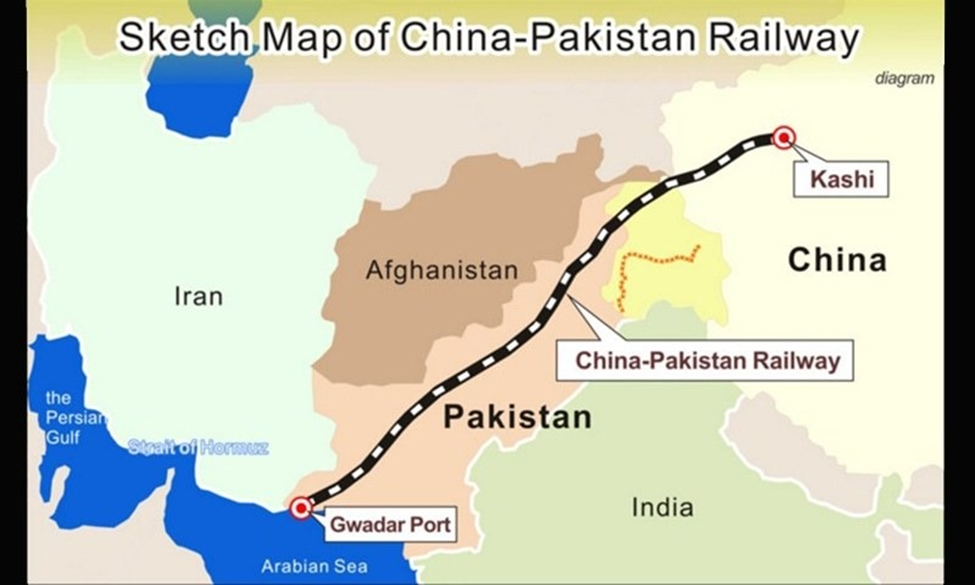
- Transforms Gwadar Port (a flagship project of the China-Pakistan Economic Corridor – CPEC) into a vibrant regional hub,
- Provides a secure, reliable route to Central Asia bypassing Afghanistan’s security and political challenges,
- Creates jobs in Balochistan and boosts the transit economy,
- Positions Pakistan as a key connector between South Asia, the Middle East, and Eurasia.
For Iran:
- Offers a dependable land route when sea access through the Strait of Hormuz faces disruptions,
- Gives Iranian traders direct access to Pakistani warm-water ports for global imports/exports.
For Central Asia (especially Uzbekistan):
- Faster and cheaper access to international markets via Pakistani ports.
Broader regional significance:
The corridor strengthens Pakistan-Iran ties, integrates with CPEC, and signals Islamabad’s strategy to become a major transit economy amid shifting geopolitics.
Potential Challenges
While the framework is now in place, success will depend on:
- Smooth customs coordination between the two countries,
- Security along routes in Balochistan,
- Infrastructure upgrades on the Iranian side for higher cargo volumes,
- Building trust through successful pilot runs.
A New Era of Regional Connectivity
The launch of the Pak-Iran Transit Corridor in April 2026 is more than a customs notification, it is a strategic masterstroke that could reshape trade flows across three regions. With the first shipment already completed and a full legal framework now active, Pakistan and Iran have turned a 17-year-old agreement into a living corridor of opportunity.
As Commerce Minister Jam Kamal Khan noted, this initiative is a “significant step toward promoting regional trade and enhancing Pakistan’s role as a key trade corridor.” If scaled successfully, the corridor could become one of the most important overland trade arteries in Asia in the coming years.