by Mirza Abdul Aleem Baig
The missiles over the Middle East are not merely weapons of war, they are signals. Signals that the age of silent economic expansion is giving way to an era where global connectivity itself has become a battlefield.
The ongoing confrontation between Iran, Israel, and the United States is not just another Middle Eastern crisis; it is a violent interruption in the architecture of 21st century geo-economics. Oil terminals burn, shipping lanes choke, and strategic corridors tremble, not by accident, but in a manner that raises a tactical yet substantial question! Is this war also about dismantling one connectivity order to make way for another?
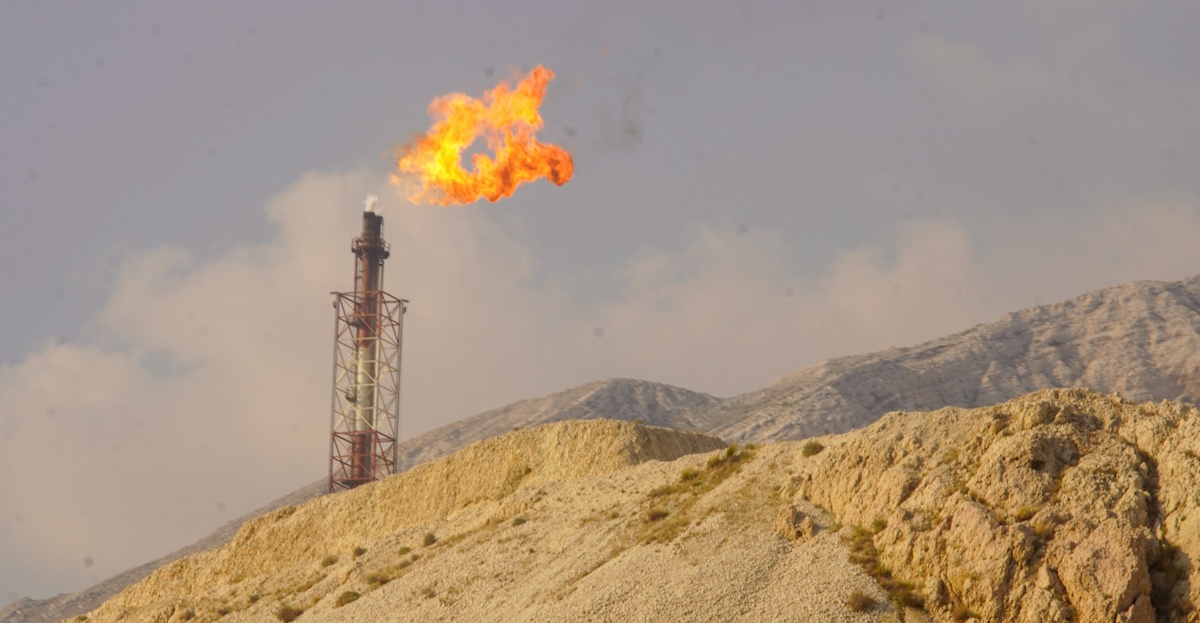
Since late February 2026, the conflict has escalated with unprecedented intensity. Coordinated U.S.-Israeli strikes under large-scale operations targeted Iranian military and strategic assets, including critical nodes such as Kharg Island – responsible for a vast share of Iran’s oil exports and key energy infrastructures like the South Pars gas field.
The killing of Iran’s top leadership and sustained bombardment triggered massive retaliation; missile and drone strikes across Israel, U.S. bases, and Gulf economies. What followed was not contained warfare, it was systemic disruption and new era of uncertainty in the Middle East.
Energy facilities across the Gulf were hit, global oil flows destabilized, and the Strait of Hormuz through which nearly one-fifth of the world’s energy passes became a zone of strategic uncertainty. The result is not just regional instability, but a shock to global trade, supply chains, and the very logic of economic interdependence. This is where the deeper geo-economic dimension emerges.
At the center of China’s Belt and Road (BRI) Initiative lies a simple premise, connectivity requires stability. Roads, railways, pipelines, and digital corridors are long-term investments built on predictability. Iran, in this architecture, is not peripheral – it is pivotal. It links Central Asia to the Middle East and Europe, providing China with strategic depth and alternative routes that bypass vulnerable maritime chokepoints.
But what happens when this node is engulfed in war? The answer is unfolding before us. Infrastructure becomes unusable, insurance costs skyrocket, trade routes fragment, and investment confidence collapses. The war, therefore, does not need to explicitly target BRI to damage it, it simply needs to make its environment ungovernable. Instability becomes a form of strategic denial, eroding China’s westward connectivity without directly confronting it.
In contrast, the India-Middle East-Europe Economic Corridor (IMEC) represents a different philosophy of global connectivity, one that is not universal, but selective and alliance-driven. It connects India to Europe through the Gulf and Israel, deliberately excluding Iran and embedding itself within a U.S.-aligned security framework. Unlike BRI’s expansive vision, IMEC thrives on controlled geography and trusted partnerships.
Herein lies the strategic convergence, the hidden geo-economic war. The weakening of Iran does more than degrade a regional adversary, it removes a central pillar of competing connectivity systems. It sidelines a state that anchors not only BRI routes but also alternative corridors linking Eurasia. In doing so, it clears geopolitical and geo-economic space for IMEC to emerge as a preferred, “secure” corridor under Western and Indian patronage.
What’s more, the war reverses recent diplomatic shifts that had favored China. Beijing’s success in mediating rapprochement between regional rivals had signaled the possibility of a stable Middle East conducive to BRI expansion. War shatters that trajectory, the region is re-polarized, and Gulf States, under threat, gravitate back toward the United States as their primary security guarantor.
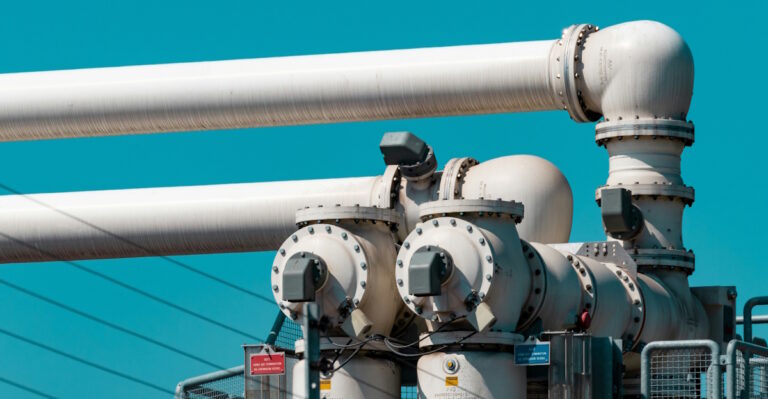
In such an environment, military alliances overshadow economic partnerships, and connectivity becomes inseparable from security dependence. Energy geopolitics further sharpens this transformation. The targeting of gas fields and oil infrastructure combined with disruptions in the Strait of Hormuz has exposed the fragility of global energy flows.
For China, heavily dependent on these routes, the implications are profound; rising vulnerability, increased costs, and strategic uncertainty. For IMEC’s proponents, however, this crisis reinforces the argument for alternative, controlled energy and trade corridors aligned with stable partners. The consequences are now cascading into a broader economic disorder that extends far beyond the battlefield.
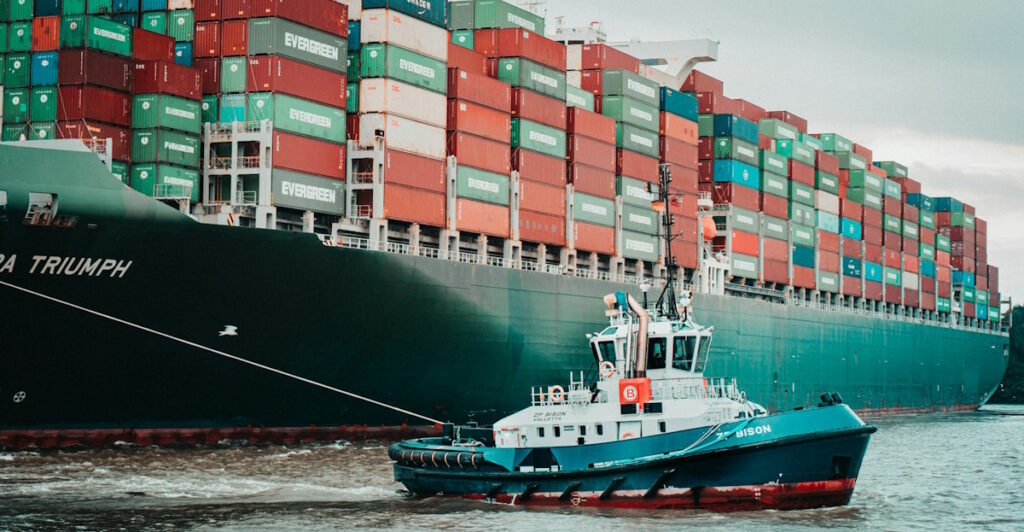
Thus, volatile oil prices are triggering inflationary pressures across both developed and developing economies. Shipping costs are surging as insurers price in war risks, while rerouted trade is lengthening supply chains and eroding efficiency. Financial markets are responding with uncertainty, and emerging economies, already fragile, face currency stress, debt risks, and reduced capital inflows.
In such a climate, global connectivity is no longer a seamless web of exchange; it is becoming a fragmented system shaped by conflict, risk, and political alignment. This economic disorder, however, is not neutral in its effects. It disproportionately undermines large-scale, open-ended connectivity models like BRI, which depend on stability and long-term planning.
On the contrary, it strengthens the appeal of bloc-based, security-backed corridors like IMEC, where risk is mitigated through strategic partnerships rather than geographic inclusivity. Disorder, in this sense, becomes a filter – privileging certain networks while marginalizing others.
For this reason, the war operates on two simultaneous levels. On the surface, it is a confrontation over security, deterrence, and regional dominance. Beneath that surface, it is reshaping the map of global connectivity, turning infrastructure into an instrument of power and instability into a geopolitical tool.
To argue that the war was initiated solely to counter BRI would be an oversimplification. Yet to ignore how closely its consequences align with that objective would be analytically naive. The systematic weakening of Iran, the disruption of key trade routes, the reassertion of U.S.-centric alliances, and the parallel rise of IMEC together form a pattern – one that reflects not coincidence, but convergence of strategic interests in a world defined by geo-economic competition.
What we are witnessing, therefore, is not just a war of missiles and proxies. It is a war over routes and relevance, over who will control the channels through which goods, energy, and influence flow in the coming decades.
To cut a long story short, the Middle East, long a crossroads of civilizations, is once again becoming the decisive arena, but this time, the contest is not only for land, but for the geopolitics of a new trade order and hidden geo-economic strategy. In the smoke of conflict, a new world order is quietly being drawn, one corridor weakened, another waiting to rise.