by Nimra MALIK
President Kassym-Jomart Tokayev gave a two-day state visit to Islamabad, 3–4 February 2026. The optics were well known ceremonial receptions, high-level discussions, and the frequent photo-ops alongside the leadership of Pakistan. President Asif Ali Zardari and Prime Minister Shehbaz Sharif welcomed him with all honours in Nur Khan airbase, Rawalpindi.
Through all the pomp and pageantry of the visit, one thing was distinctive, the silence of the Strategic Partnership Agreement. But a paucity of sharply focussed, operational pledges or flagship projects, as one would have expected out of a presidential state visit of this scale. This divergence of visibility and the particularity is no coincidence. It is a strategic diplomacy decision.
The visit by Tokayev was to rebrand the diplomatic position of Kazakhstan in a period when states are operating in a more conditional global environment. As opposed to initiating specific cooperation projects. The two-day-summit was expressly organized to indicate the independence and ability of Kazakhstan not to bind itself to certain results. The real result of the visit was delivery of politically message which was strategically calculated, but with enough generality to maintain diplomatic capability.
The visit was the first state visit in over 20 years since a Kazakh president had made the visit to Pakistan according to official announcements. Kazakhstan and Pakistan have always been in contact as one of the first nations to acknowledge Astana as an independent state in the year 1991. The relations between the two states were always marked with a lack of interaction on the level of strategic partnership, but rather distant friendly cooperation.
This trip was specifically positioned as a step to the next level of the relationship. Leaders signed a Joint Declaration on Strategic Partnership on 4 February 2026, pledging to intensify cooperation in both states in eight priorities, such as political dialogue, security, trade and investment, logistics, education, and climate cooperation. The foreign office of Pakistan had foreseen the discussion of the enhancement of trade, connectivity as well as logistics collaboration during the visit.
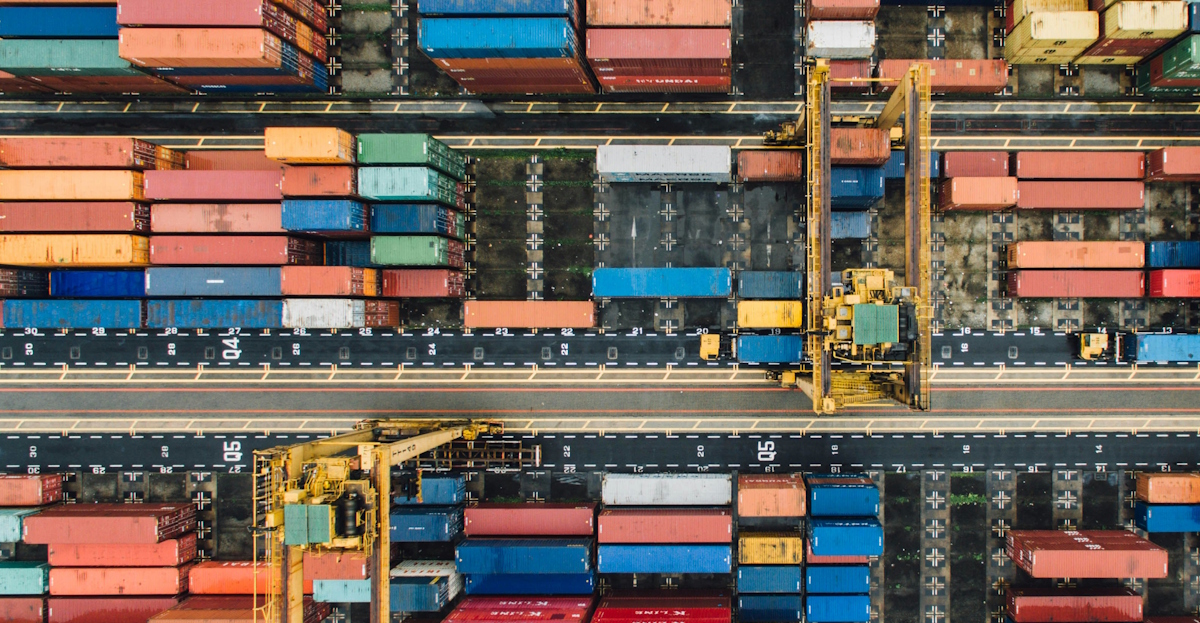
The bilateral trade between Pakistan and Kazakhstan amounted to approximately US 105 million during the year 2025 between January and November which is a significant increase compared to the same period of 2024. A common goal that both governments have expressed is a bilateral trade expansion of US $ 1 billion over the next few years. A US$108 million agreement to buy 600 new electric buses is another indicator of the economic motivations behind the partnership, Still, the absence of detailed implementation structures perpetuates the thesis that the partnership is more of a symbolic partnership, as opposed to a functional one, in terms of political implications. But even after these proclamations, the contents were mere slide pronouncements as to cooperation frameworks and not plans of implementation.
Had this aim been to establish a closely knit, project-based collaboration, it could be foreseen that there would be a close memorandum detailing deliverables, due dates or flagship infrastructure promises. In fact, thirty-two business deals have been signed during the visit at the business forum, among them an industrial contract of electric buses worth 108 million, which is an economic intention.
Despite this the agreements themselves even in sectors logistics to digital services were not concentrated in a sequence to create a coordinated roadmap. Such trend implies the preference of broad but open-ended engagement rather than committed and binding engagement.
Analysts described the visit as signifying a subtle. But significant change in the geo-economic perspective of Central Asia in which Pakistan is becoming increasingly viewed as a feasible southern gateway, but that it was the geopolitical significance and not project specificity that carried the day.
International Situations that influence Strategic Signalling
This should be viewed in the context of the larger diplomatic environment in order to make sense of this behaviour. The foreign policy that has existed since independence has been multi-vector approach diversification of political and economic relations between Kazakhstan and the main power and regions to maintain independence.
At the same time the international order now is less accepting of ambiguity, as of 2022. The complete Russian invasion of Ukraine aggravated the polarity in geopolitics and made neutrality a subject of questioning. Competitive trade standards, Sanctions and secondary compliance regimes have transformed ordinary involvement into a political declaration. Even neutral involvement poses a threat to states, such as Kazakhstan, in such an environment that it will be interpreted as either side.
It is therefore not only how one in which partnerships are made, but how they are communicated and left open that becomes more significant.
Why Pakistan?
Pakistan is strategically placed in South Asia; Yet it is not a strong force in the Eurasian power politics. As compared to interaction with regional centres like Russia, China, Turkiye or the European Union, the geopolitical presence of Pakistan is not centrally positioned within major blocs. This renders Islamabad as a safer platform to do diplomatic signalling that cannot arouse rough counterreactions.
Also the fact that Pakistan was potentially a transit centre, and its regional focus on linking with Central Asia meant that it could be an easy target to demonstrate to Kazakhstan its southern diplomatic spectrum without pushing it into a binary decision regarding the great-power rivalry.
The decision of the partner was, therefore, equal to the visit itself.
The Role of Presidential Diplomacy
The presidential visits do not have the same meaning as the working-level engagements. They are intent-based and recognition-based, not only negotiation. They convey seriousness and importance to the international audience.
This was the situation where a state visit was not necessary to negotiate agreements with Kazakhstan. It already had collaborated with Pakistan on the ministerial and parliamentary level. Rather, the rise indicated that Astana takes Islamabad as a significant interlocutor but without committing itself to a project-based, strict agenda.
Such an explicit form of visible interaction with explicit evasion of strictly defining deliverables is typical of diplomatic signalling by states aiming to be flexible in uncertain situations.
Several Audiences, Single Message
The visit had various meanings to the various audiences. To large countries Kazakhstan indicated that it has the freedom of diplomatic movement and will not limit itself to one bloc. And to regional peers. The visit demonstrated that diversified engagement could be conducted in a quiet but slow and gradual and non-confronting way. To investors and markets, It communicated stability and reliability that Kazakhstan is open to collaboration in various levels.
The Strategic Partnership formulation even implies further interactions such as consistent discussions and cooperation within larger structures; still, it does not elaborate on the strategic dependencies that may restrict independence.
The thrust of Tokayev in Pakistan is indicative of a larger trend amongst middle powers: indicating preference by presence, rather than by commitment. Instead of defining the end state, they create perceptions of flexibility that leave room to change with changes in global alignments.
In this form of diplomacy, reversibility and interpretative vagueness are appreciated in a world where explicit promises are easily transformed into burdens.
The visit of President Tokayev to Pakistan, in February 2026, was not directly aimed at expanding the current cooperation projects. Instead, it served as a subtle process of strategic signalling, which was meant to re-brand Kazakhstan as an independent entity that could attract a wide range of constituencies without sacrificing policy flexibility.
The visit might seem generic to those observers who are interested in tangible output. But as we can see through the lens of the scholars who are sensitive to the modern diplomatic government, it sent a well-measured signal; a state can be both present and active and gravitas and yet be able to be flexible in a more competitive global system.
The fact that it is silent on the operational specifics should not be taken as a sign of weakness. Instead, it is a strategic diplomatic gesture, informed by the current localities and strategic labels that dictate the participants of such an act. The true evaluation of this collaboration will not be made based on the declarations, but the real implementation of the common initiatives.