
by Muhammad Asif NOOR
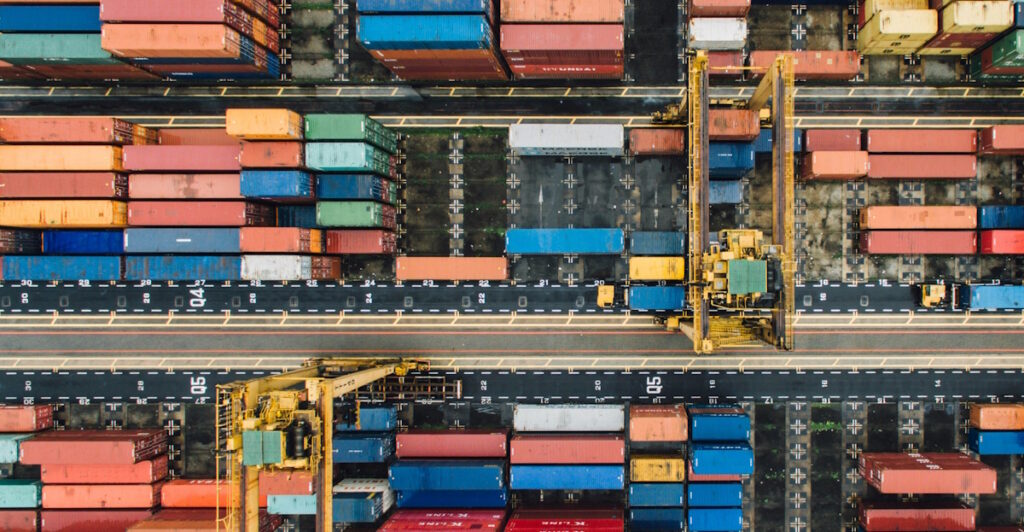
In an era marked by geopolitical uncertainties and economic headwinds, China’s import volume has shattered records, reaching an unprecedented 18.48 trillion yuan (approximately $2.58 trillion) in 2025. This milestone, representing a modest yet significant 0.5% year-on-year growth in yuan terms, is a testament to the nation’s unyielding commitment to openness, innovation, and shared global prosperity. As the world’s second-largest importer for the 17th consecutive year, China continues to anchor international trade, injecting vitality into a sluggish global economy while advancing its own high-quality development. This achievement, achieved amid U.S. tariffs and supply chain disruptions, exemplifies the wisdom of the “dual circulation” strategy outlined in the 14th Five-Year Plan, balancing domestic strength with international engagement.
The path to this record is rooted in decades of strategic economic evolution. Since joining the World Trade Organization in 2001, China’s imports have surged from around $50 billion annually in the 1990s to over $2.5 trillion by 2023, with average annual growth rates hovering at 13.29% between 2010 and 2020. The 14th Five-Year Plan period alone saw cumulative imports exceed 200 trillion yuan, a 40% increase from the previous cycle, averaging 7% annual growth.
In 2025, this momentum culminated in seven consecutive months of year-on-year import growth starting from June, accelerating to 4.4% by December, when imports hit $243.64 billion, a 5.7% rise, the fastest in nearly four years. Such consistency reflects Beijing’s proactive policies, including tariff reductions on over 1,000 items and the expansion of free trade zones, which have lowered barriers and stimulated inflows.
Breaking down the 2025 data reveals a multifaceted picture of resilience. Overall foreign trade volume climbed to 45.47 trillion yuan ($6.51 trillion), up 3.8% from 2024, crossing the 45-trillion-yuan threshold for the first time. While exports grew robustly at 6.1% to 26.99 trillion yuan, imports held steady, contributing to a record trade surplus of $1.189 trillion. This surplus, while drawing international scrutiny, underscores China’s role as a net provider of goods to the world, supporting recovery in partner economies.
By trading partners, diversification shone through, imports from Japan rose 5.5%, Hong Kong 72.6%, Taiwan 6.0%, South Korea 3.1%, and India 9.7%. In contrast, declines from the U.S. (-14.6%), ASEAN (-1.6%), EU (-0.4%), and Russia (-3.9%) highlight a strategic pivot toward Asian neighbors and emerging markets under the Belt and Road Initiative (BRI). The EU remains the top source at 13% of imports, followed by South Korea, Taiwan, and Japan at around 8% each, with the U.S. and Australia at 6%.
Commodity-wise, the surge was led by high-tech and energy sectors, aligning with China’s drive for technological self-reliance and energy security. Automatic data processing equipment imports jumped 18.2%, high-tech goods 9.3%, and integrated circuits 10.1%, with machinery and transport equipment comprising 38% of total imports. In the first seven months, integrated circuits alone reached $228 billion, and data processing equipment $56 billion.
Energy imports were particularly stellar: crude oil averaged 11.6 million barrels per day, up 500,000 barrels from 2024 and surpassing the 2023 peak of 11.33 million. Mineral fuels and lubricants accounted for 17% of imports, though refined oil and natural gas fell 18.2% and 13.0%, respectively. This stockpiling, exceeding processing needs by 1 million barrels per day in the first 11 months, was a prudent response to volatile global prices and geopolitical risks, such as the Russia-Ukraine conflict and Middle East tensions.
Other categories included crude materials at 14%, chemicals at 11%, manufactured goods at 7%, miscellaneous articles at 7%, and food/live animals at 4%. Declines in steel (-10.7%) and coal/lignite (-30.6%) signal progress in domestic overcapacity reduction and green transitions. Private enterprises, driving 57.3% of trade with a 7.1% increase, involved over 780,000 entities, demonstrating the vibrancy of China’s market-oriented reforms.
This record was the fruit of deliberate policy foresight. Beijing’s fiscal stimulus and monetary easing bolstered domestic demand, with machinery products growing 5.7% to 7.41 trillion yuan. Free trade agreements with 29 countries facilitated diversification, mitigating U.S. tariffs that averaged 47% on Chinese goods by late 2025—down from initial threats of 145% but still a hurdle. The weakened yuan made imports more affordable, contributing to monthly trade surpluses exceeding $100 billion seven times. Moreover, pre-Lunar New Year stockpiling and industrial resilience in manufacturing hubs countered domestic challenges like a sluggish property market. As customs officials have noted, without external barriers, imports could have been even higher, underscoring China’s potential as a global demand engine.
What does this truly signify? Domestically, the record bolsters GDP growth around 5%, creates jobs in logistics and retail, stabilizes prices through diverse sourcing, and accelerates technological upgrades in semiconductors and renewables. It advances “high-quality development” by importing advanced inputs that enhance productivity.
Globally, China’s $2.58 trillion-plus imports provide vital markets for partners—from Australian iron ore and Brazilian soybeans to African commodities under BRI frameworks. This inflow supports recovery in exporting nations, fosters mutual benefits, and counters narratives of isolationism. The surplus, while large, stems from market forces and China’s manufacturing edge, not unfair practices; it has helped absorb global oversupply and stabilize commodity prices.
Challenges persist, geopolitical tensions, domestic consumption weaknesses, and environmental goals may moderate future growth. Yet projections for 2026 suggest continued modest expansion, bolstered by the upcoming 15th Five-Year Plan’s focus on consumption and deeper multilateral ties.
Ultimately, China’s import record means enduring openness in a protectionist era. With over 1.4 billion people sharing “development dividends,” China not only sustains its economic miracle but also anchors global prosperity. In an interconnected world, this achievement reaffirms that cooperation, not confrontation, delivers shared victories.