by Sebastien GOULARD
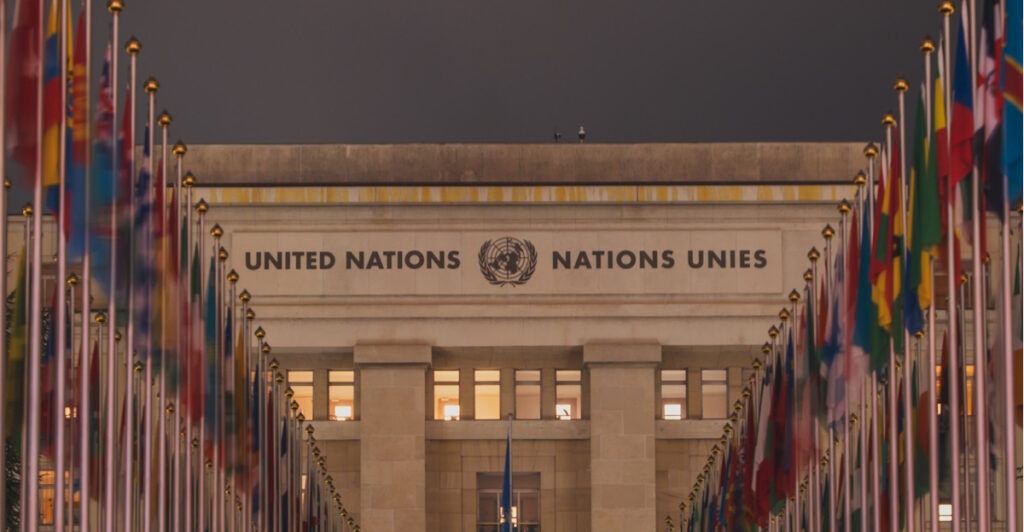
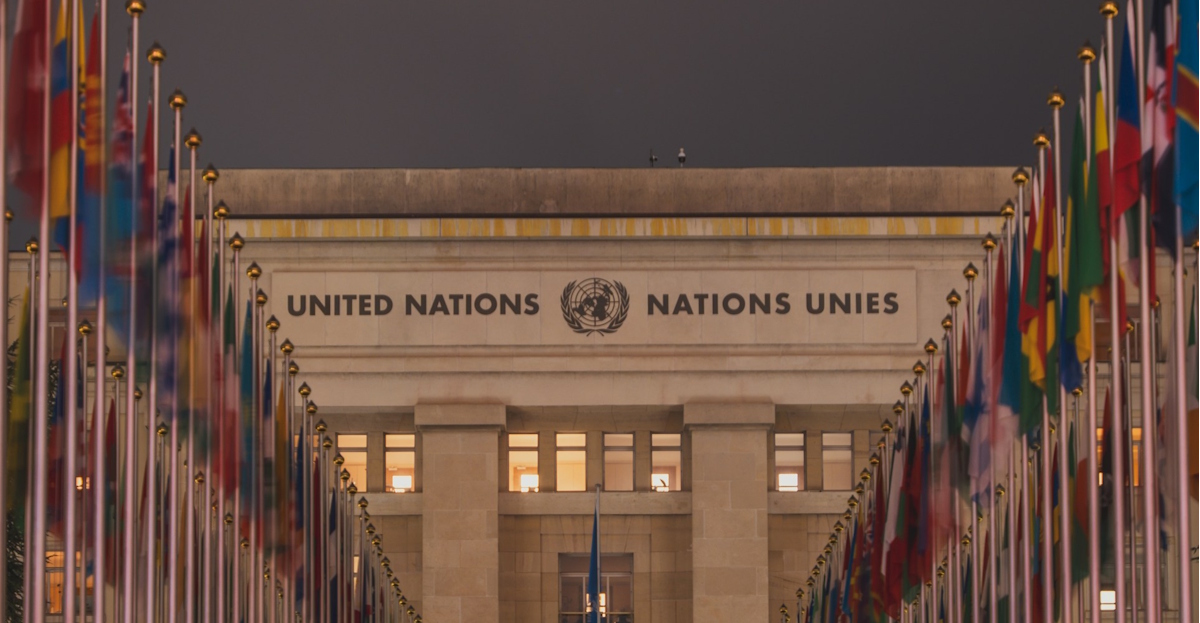
On 22 January 2026, alongside the World Economic Forum in Davos, the Charter of the Board of Peace was signed, a new international organization promoted by the U.S. President and which, according to him, could “replace the United Nations.”
The origins of the project
The Council of Peace promoted by Donald Trump originates from the peace plan announced by the U.S. President in February 2025. United Nations Security Council Resolution No. 2802, adopted in November 2025, validates the creation of a Board of Peace for the reconstruction of the Gaza Strip. Stability in the Middle East thus becomes the primary objective of this Board, which is not based on any treaty and is not part of the UN system. However, according to Donald Trump, the scope of action of this new instrument is not limited to the Middle East. It is still difficult to assess the full reach of this new Board of Peace.
An American disengagement
The launch of this new initiative coincides with the withdrawal of the United States from several UN agencies. Thus, on 6 January 2026, Donald Trump announced the withdrawal of the United States from 66 agencies, including the World Health Organization, the UN scientific expert panel on climate (IPCC), and the International Renewable Energy Agency, after having already announced the departure from UNESCO in July 2025. This withdrawal is justified by the claim that these agencies did not serve U.S. interests. This means that the new Board of Peace unveiled by Donald Trump will have as its priority the promotion of United States interests worldwide, marking a break with the current system of international cooperation.
The response of the international community
To date, the U.S. President has invited around sixty States to join his Board of Peace, and the reception given to this initiative has been, to say the least, mixed.
First, among the States that have accepted the U.S. invitation are medium-sized powers seeking international legitimacy, which see in the Board of Peace an opportunity to assert their power. This is the case for Vietnam, Indonesia, as well as Pakistan and Kazakhstan. There are also States that are directly concerned by the Gaza reconstruction project (which remains the primary objective of this Board of Peace). Thus, Egypt, Turkey, the United Arab Emirates, Saudi Arabia, Jordan, Bahrain, and Qatar have agreed to join the Board of Peace. They cannot afford to remain silent on the reconstruction of the Middle East. Israel has also accepted the offer, even though the Netanyahu government appears reluctant to allow foreign countries to be involved in security issues primarily concerning Israel.
Among European States and other traditional allies of the United States, responses have been more cautious. France was the first to refuse the invitation, followed by Germany, the United Kingdom, Spain, Norway, and Slovenia. Italy, whose Prime Minister, Giorgia Meloni, is nevertheless close to President Trump, has taken refuge behind a constitutional argument to decline the offer. Among European Union members, only Orbán’s Hungary and Bulgaria have agreed to join the Board of Peace. Canada, which had accepted the offer on the condition that it would not have to pay a “membership fee,” saw its invitation withdrawn by Donald Trump. In Asia, Japan and South Korea remain doubtful about this new body and have decided to give themselves time to decide whether or not to join the Board of Peace.
The major powers, permanent members of the UN Security Council other than the United States, view this new instrument as an initiative that could potentially undermine their international influence. China has refused Donald Trump’s invitation. As for Russia, it could see this initiative as a way to reaffirm its status and regain respectability following the international sanctions imposed against it due to the war in Ukraine. However, Vladimir Putin has not yet officially given his approval. The States that choose today to join the Board of Peace initiated by Donald Trump appear to be primarily concerned with strengthening their relations with the United States, more so than with international cooperation.
A regulatory framework that remains unclear and unbalanced
While the United Nations Security Council is regularly criticized because of the presence of permanent members, namely the United States, Russia, China, France, and the United Kingdom, each holding a veto power, the Board of Peace inaugurated by Donald Trump appears even more unbalanced. Above all, it is the power directly held by Donald Trump within this organization that raises questions. Although it is indeed States that are invited to join the Board, it is not chaired by the United States, but directly by Donald Trump. It is the current President of the United States who decides on invitations to join the Board and who will designate his successor. His mandate has no time limit and is independent of the term of office of the President of the United States. This therefore represents a very strong personalization of the presidency of the Board of Peace. A single individual determines the direction adopted by this organization. To become a permanent member of the organization, each country must pay a membership fee of one billion dollars, which will be deposited into a fund managed directly by Donald Trump. Membership for States that do not pay this fee will be renewed every three years. Technically, however, nothing prevents Donald Trump from delivering a “You’re fired” to any State.
The principle of “one State, one vote” is abandoned in favor of American leadership, or rather, of Donald Trump, who sets the organization’s agenda. Close associates of Donald Trump also play an important role in this new Board. Thus, Jared Kushner, Donald Trump’s son-in-law, would sit on the executive board of the Board of Peace. He would be joined by the President of the World Bank, as well as former British Prime Minister Tony Blair. On this executive board, one would also find Marc Rowan, CEO of Apollo Global Management, a U.S. private equity fund. Companies could thus wield more influence over global affairs than sovereign States. With the Board for Peace, we are witnessing a blurring of boundaries that could threaten international relations. While the UN system has many weaknesses, the initiative promoted by Trump is not without flaws.