
by Sebastien GOULARD
In early December 2025, French President Emmanuel Macron travelled to China for his fourth official visit, during which he met his counterpart, President Xi Jinping. Beyond the communication operation involving the mobilisation of table tennis champion Félix Lebrun in Chengdu, this state visit had two objectives. The first, of a geopolitical nature, was to remind Beijing of the reality of the Ukrainian conflict and to encourage China to exert its full influence on Moscow so that Russia would adopt a more constructive approach regarding the war in Ukraine. The other key issue concerned trade relations between China and the European Union, in particular the trade deficit of France and its European partners vis-à-vis China. On both fronts, progress was very limited, and the visit by the French president was considered a failure by some observers. However, despite this, both parties have an interest in continuing this dialogue in an increasingly unstable world.
France and Chinese Support for the Russian Economy
France, like other European states, is concerned about the war waged by Russia against Ukraine. The European Union has imposed several sanctions on companies that continue to trade with Russia and is concerned about the support provided by certain countries, such as India or China, to Russia, which continue their commercial exchanges, notably the purchase of oil from Moscow. Since the start of the Russo-Ukrainian conflict, the European Union has encouraged China to push Russia, within the framework of their “no-limits” friendship, to negotiate with Ukraine, so far without tangible results.
On the one hand, the crisis in Ukraine and the closure of European markets to Russia have strengthened Moscow’s dependence on Beijing. Chinese exports to Russia increased by 70% between 2021 and 2024. However, in 2025, for the first time, the volume of trade declined between the two powers. China continues to import hydrocarbons from Russia despite international sanctions and thus contributes to the Russian war effort. From the start of the war in Ukraine until November 2025, nearly 47% of total Russian unrefined oil exports were destined for China. While, since autumn 2025, major Chinese oil companies have committed to reducing their imports of Russian oil in order to avoid exposure to US and European sanctions, this is not the case for smaller refineries, which continue to trade with Russia. Moreover, recent events in Venezuela could also force China to increase its imports of Russian oil if it were to lose access to Venezuelan resources.
President Xi Jinping stated that China supported peace efforts but opposed any defamatory accusations. If Beijing refuses to become more involved in efforts led by the international community to force Russia to negotiate, it may be that, beyond its commercial interests, China lacks the means to make Russia see reason. One may question whether the Chinese president can truly convince his Russian counterpart to change his position, given that Vladimir Putin appears bogged down in this war and that any withdrawal could be seen as an admission of weakness. On the Ukrainian side, it would appear that there is no longer any hope that Beijing can genuinely influence Moscow, and there is suspicion that China is providing support to Russian intelligence services, particularly after Chinese satellites flew over disputed areas last October.
On security issues, Europe and China hold very divergent positions regarding the Ukrainian dossier.
Trade Tensions Between Europe and China
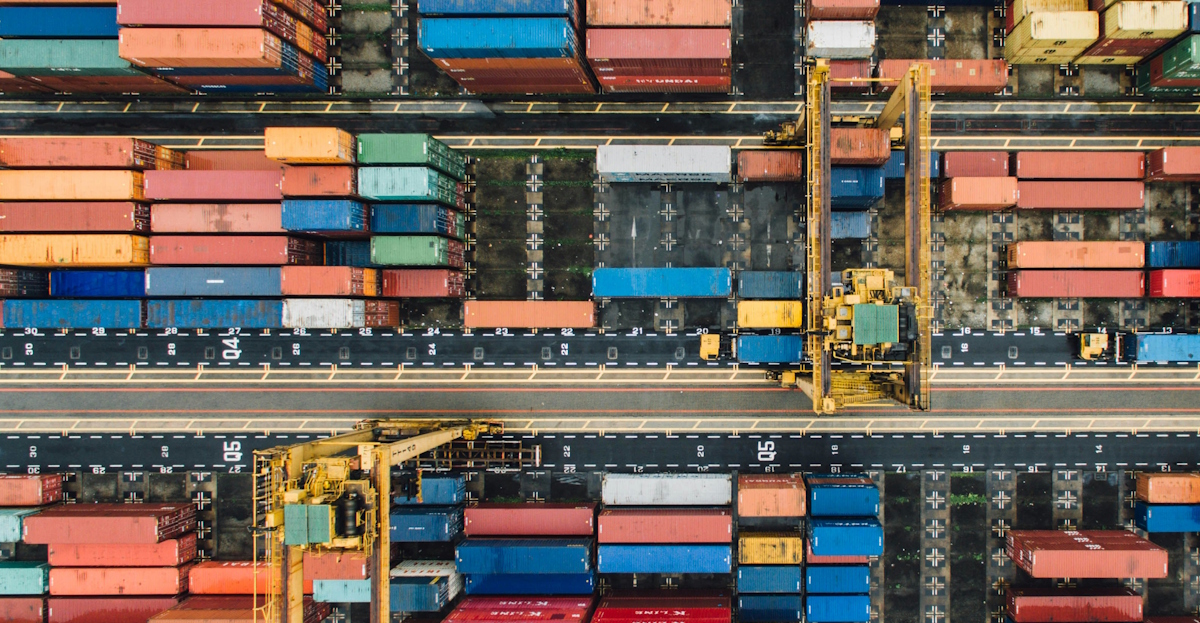
The other sensitive issue raised by President Macron was the trade imbalance between China and Europe, as well as the persistent tensions between the two blocs. In 2024, the European trade deficit vis-à-vis China exceeded €300 billion, prompting Europeans to reassess their relationship with China in a context of seeking strategic autonomy—a concept promoted by President Macron.
Since the adoption of a surcharge on Chinese electric vehicles by the European Union in autumn 2024, relations between Beijing and Brussels have significantly deteriorated, and China’s decision to restrict its exports of rare earths demonstrates the asymmetry between Europe and China. While Europeans had previously hoped to increase their investments in China, one of their priorities today is to attract Chinese companies into the competitive markets of various European countries.
The expansion of platforms such as Temu and Shein on the European market is another issue exacerbating Sino-European relations and one that European states are attempting to control, notably through the introduction of a tax on small parcels, as voters have seized upon this issue.
A Dynamic to Be Sustained
President Macron’s visit to China did not result in major announcements in terms of investment or cooperation, beyond the welcoming of new pandas. However, this partial failure does not mean that Sino-French relations are at a standstill nor that such visits are useless. On the contrary, in the face of protectionism, it is crucial that high-level meetings between French, European, and Chinese leaders continue and even intensify.
However, the time is over when European leaders travelled to China to lecture on certain issues. France, on its own, is in a position of weakness, but together with its European neighbours, relations are more balanced. The European challenge is therefore to speak with a single voice, one that takes into account all nuances, from Portugal to Estonia.
The speech delivered by the Head of State to ambassadors on 8 January clearly encapsulates France’s position. Emmanuel Macron did not hesitate to describe China as an aggressive commercial power, posing a threat to European economies. Yet at the same time, he called for the G7—whose presidency France will assume in 2026—not to become an “anti-China club.” France is concerned about a possible fragmentation of the world. The objective of France and Europe is not to halt exchanges with China and other powers, but to become less dependent on them.