by Nimra KHALIL
The Hejaz Railway is still considered one of the most emblematic and grandiose transportation projects of the history of Middle East. Constructed between 1900 and 1908 by the Ottoman Empire, the line connecting Damascus and Medina was more than 1,300 kilometers long, spanning deserts, volcanic plains, and mountains. The railway is also the source of inspiration to historians, policymakers, engineers, and cultural institutions more than a century ago.
However, it is no longer merely a historical symbol. New regional rebuilding plans have brought the Hejaz Railway back into focus as a potential major transport line, bridging the past and present.
A Faith-based Vision of Unity
The Hejaz Railway was a concept born when Sultan Abdul Hamid II was in power and when the Ottoman Empire was under pressure both internally and externally. The Sultan envisioned a railway that would centralize administration over remote provinces, enhance transportability to all parts of the empire and above all, the Hajj pilgrimage of the millions of Muslims.
Before the railway, Syrian, Jordanian, and Palestinian pilgrims, and Muslims from other regions, traveled by foot or caravan to Medina, a journey that took over 40 days. They faced dangers from bandits, extreme heat, and lack of water. The railway made this road superior, and made traveling time to a mere three or four days, and also made the road far safer than it once was.
What is exceptional and little known is that the Hejaz Railway was not financed through European credits but was predominantly financed by the Muslims all over the world. The Central Asian and North African region, and the Indian subcontinent, including current-day Pakistan came to see donations flowing as scholars and community representatives pushed the project as a sign of unity in the Muslim world. This economic bonding made the railway distinctive and it could not be compared with a majority of mega- projects of the early 20th century.
A Breakthrough of Engineering Over Rugged Ground
The building of the Hejaz Railway was a phenomenal achievement. The engineers were expected to construct tracks across distant deserts, rocky lava flows, and mountain ridges, in many cases with little water or even modern equipment available. Hundreds of bridges, culverts, stations, and telegraph lines were constructed despite extreme weather conditions.
A great number of the stations were specifically planned as small fortresses complete with thick stone walls, watchtowers, and safe storerooms. This was an architectural plan that provided the security of the telegraph operators as well as the passengers that went across isolated tribal areas.
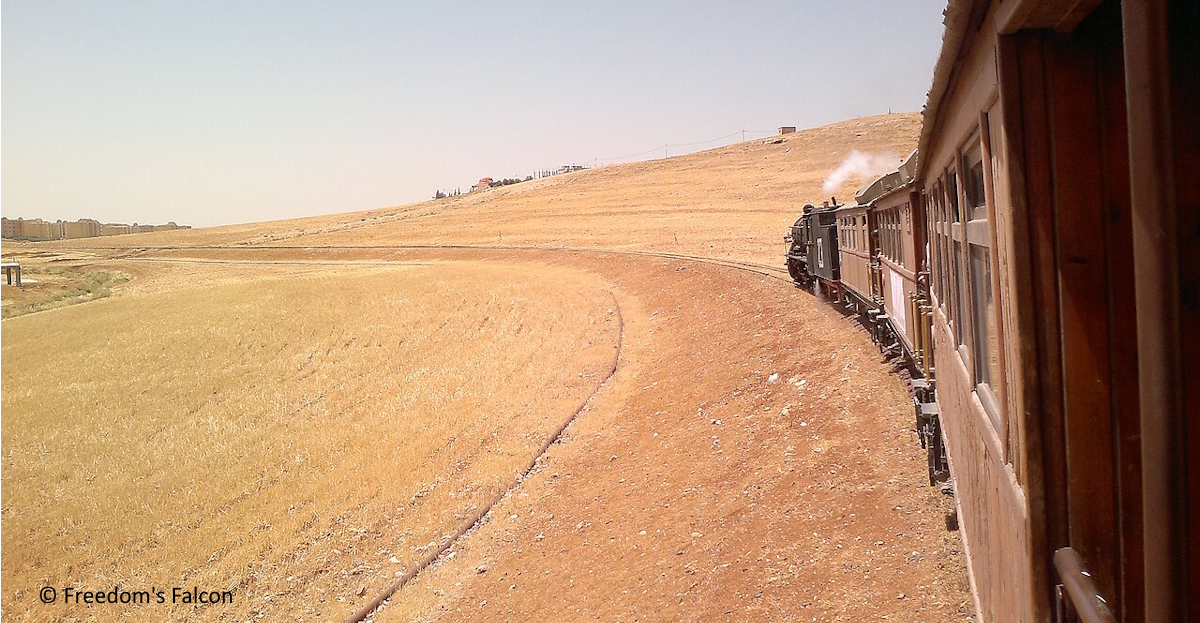
Stations of the line were also beautiful in terms of their Ottoman style; they were both practical and cultural. In modern times a number of surviving steam locomotives of German manufacture in the Hejaz Railway have been restored in Jordan and Saudi Arabia, and some are still operational, providing a feel of what industrial engineering was like in the early 1900s.
A Tactical Lifeboat in the First World War
Although the purpose of the railway was to benefit pilgrims, it also emerged very soon as an asset of paramount importance to the military. During World War I the Ottoman Empire utilized it to deliver supplies and troops throughout the Arabian Peninsula. The strategic value of the railway also caused it to be one of the major targets in the Arab Revolt (1916-1918).
The Hejaz Railway was one of the most damaged rails during the war, and Arab warriors with British assistance continued to blow the bridges and rail points up. T.E. Lawrence (Lawrence of Arabia) became known as the leader of most of such guerrilla actions, which upset the logistical system of the Ottoman and caused them to retreat further out of Arabia.
Such substantial portions of the line were ruined by the time the war ended. With the dissolution of the Ottoman Empire, the Middle East region was divided into new nation-states, and there was no central government to fix and service the railway, which resulted in decades of neglect.
Destruction and Decadence of the Ottoman Period
The Hejaz Railway was split into control of new nation-states after the World War I with different political and economic priorities: Syria, Jordan, and Saudi Arabia. The railway slowly became quiet without the effects of a coordinated restoration.
Stations were deserted, and desert areas were covered by sand dunes. Nevertheless, the dry climate was able to leave many original structures, which means that specialists are sure that even a number of parts could be restored even nowadays.
Jordan had only a few freight and heritage services, with Saudi Arabia having preserved stations in Medina, AlU la, and Tabuk as historical. The cultural recollection of the Hejaz Railway existed even after the cessation of the constant service.
An emerging Heritage and Tourism Legend
The railway is gaining acceptance today, as a worthwhile cultural item. A number of stations now are turned into museums: The Amman Railway Station Museum in Jordan has restored locomotives and original Ottoman railway archives. The Hejaz Railway Station in AlUla, Saudi Arabia has now become one of the biggest tourism attractions and it has been listed in the global heritage campaigns. Under Vision 2030, Tabuk and Madain Saleh, (AlUla), stations are being incorporated into the Saudi tourism routes. The railway also served in the formation of new settlements along the route and the pattern of population and trade remained everlasting in the Levant and Hejaz areas.
The recent Revival and Future Prospects (2025)
In one of the biggest changes in decades, a draft MoU was signed in 2025 by Turkey, Syria, and Jordan to restore major parts of the historic Hejaz Railway, the first coordinated reconstruction initiative since the first half of the 20th century. As it is told by credible sources of regional news: Turkey will help in replacing about 30 kilometers of track that had been lost within Syria. Jordan will also assist in maintenance of locomotives (technical support), and planning of cross border operations. The new road and rail integration will be studied jointly in an effort to improve connectivity between Turkey and the Red Sea through Jordan based Port Aqaba.
The revival as described by the officials is not just a heritage project but a strategic economic initiative especially in the desired growth of trade, tourism and collaboration among the region. The transport authorities in Jordan have gone to an extent of fixing a provisional date of reconnecting the Damascus to Amman rail line by 2026, but this would still bring back the connectivity of the old route. This renaissance is a part of a greater trend in the Middle East: a modernization of ancient infrastructure but to conform to the needs of contemporary economics and logistics.
The Cultural Linkage of Pakistan
Pakistan has a strong link with Britain since the railway was never transited through South Asia. In the Ottoman period, Indian subcontinent Muslims contributed widely to the fund of Hejaz Railway considering the funding as a religious obligation and a support to the Muslim affairs worldwide. In modern times, Pakistani historians, cultural authors and educational institutions still emphasize the railway as a special case of modernization, initiated by Muslims. The reason why Hejaz Railway is still relevant is as follows:It shows how infrastructure can bring various parts together enhancing pilgrimage trails, commerce, and cultural affiliations. It teaches valuable principles on current-day railway design – particularly on dry climates and highly strained politically. It is rich in heritage, and this makes it tourism, which in turn, generates national identity and economic development. Using the planned revitalization of 2025, regional connectivity may be reformed once more transforming an ancient path into a current one between Turkey, Syria, and Jordan.
Conclusion
Over a hundred years after its completion, the Hejaz Railway remains the monument to the power of belief, construction and the desire to work together. It transformed the pilgrimage, transformed movement in the Middle East and brought unity across the borders in the time of global transition. The railway is today taking a new turn – a turn that involves tradition and progress, the past and the future. The Hejaz Railway is not just an image of the past, but a living symbol of a connection, a collaboration, and culture that perseveres. Its restoration demonstrates that the old infrastructure can continue to influence the development of the region in the 21st century and further.