by Farwa IMTIAZ
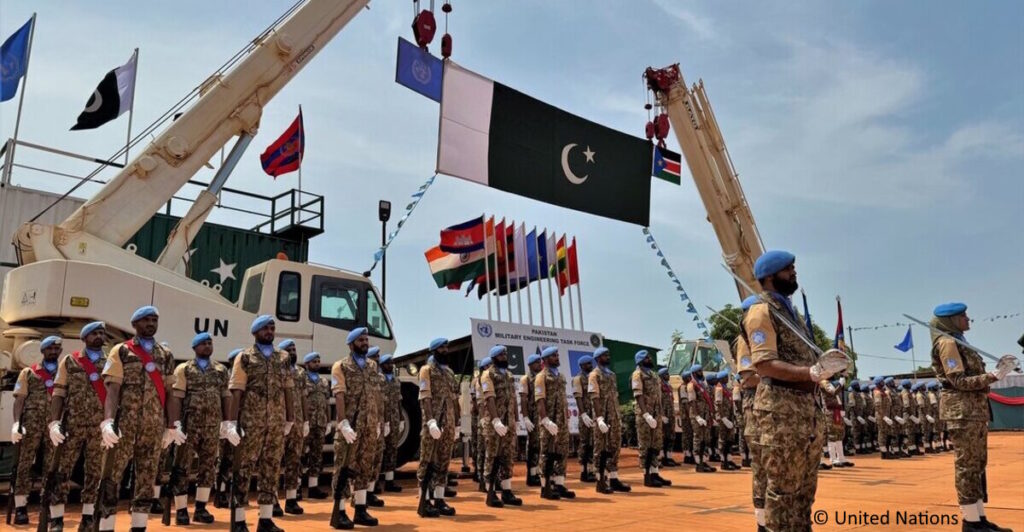
On June 1, 2026, European Union’s (EU) representative, Kaja Kallas, stood in Islamabad and made two statements. Firstly, she acknowledged Pakistan as the primary mediator in the current US-Iran conflict, and secondly she reminded the room that Pakistan’s continued access to the European markets depended on Pakistan’s progress on human right scales. Both are simple statements, however, deep down, they showcase a dual mindset, one that enforces conditionality; Pakistan should carry the weight of regional stability, and be warned that its trade can be cut off if political benchmarks shift in the future.
Human rights are non-negotiable. Gender abuse, militant violence, misuse of blasphemy laws, and a lack of freedom of speech are some of the major issues that Pakistan needs to work on. Conditionality, therefore, is not wrong in principle. However, the EU has not reckoned with the fact that trade conditionality has grave macroeconomic consequences for people who have no say in policy making, and no ability to absorb the shock. So, would a trade cut off not further deteriorate human right conditions in Pakistan? That is a dilemma the EU has not thought of.
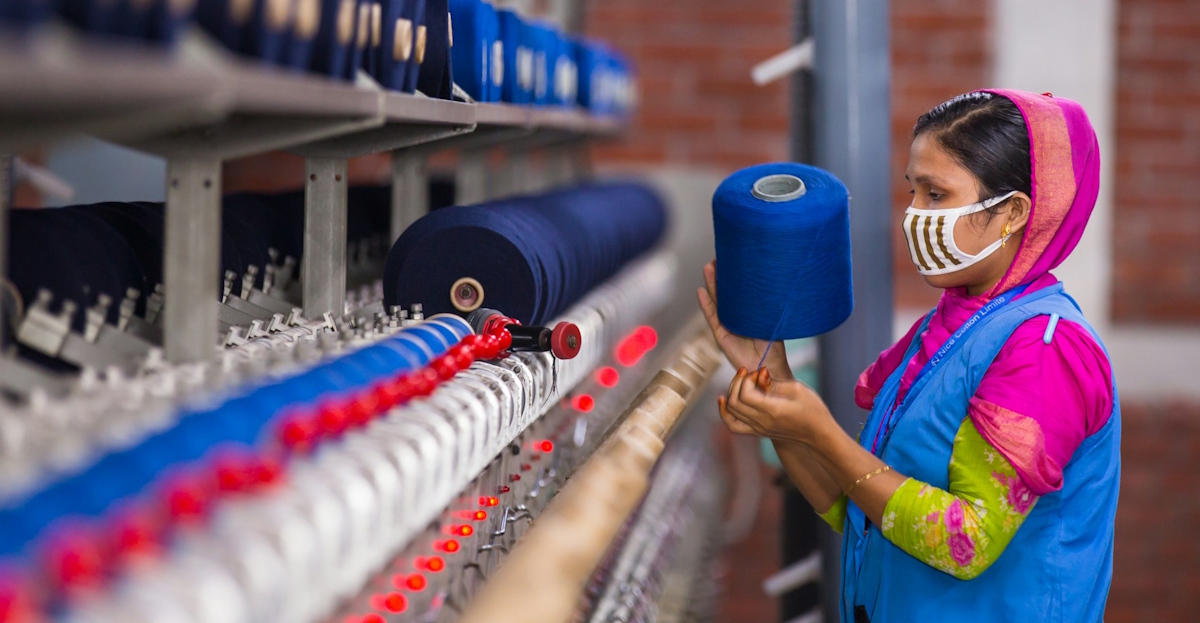
The economic metrics speak for themselves. Pakistan’s exports to the EU reached $9.82 billion in 2025, making it Pakistan’s single largest export destination, bypassing the United States and China. The GSP+ scheme that grants Pakistan zero-duty access on Sixty-Six Per Cent EU tariff lines, saves Pakistani exporters between $450 million and $550 million in annual tariffs and directly sustains millions of jobs, the majority held by women. This showcases a structural reality of Pakistan’s export economy.
Pakistan has also not remained passive in this arrangement. It has ratified all twenty-seven international conventions, requiring adequate human rights standards, labor standards, environmental protection, and good governance under GSP+. In December, 2025, EU also acknowledged that Pakistan is working on streamlining its death penalty application with international standards, and will establish a commission on minority rights. Pakistan’s National Commission for Human Rights regained “A” status accreditation. It was also elected to the UN Human Rights Council for 2026 to 2028. This showcases how Pakistan is moving in the right direction, despite being a lower income economy.
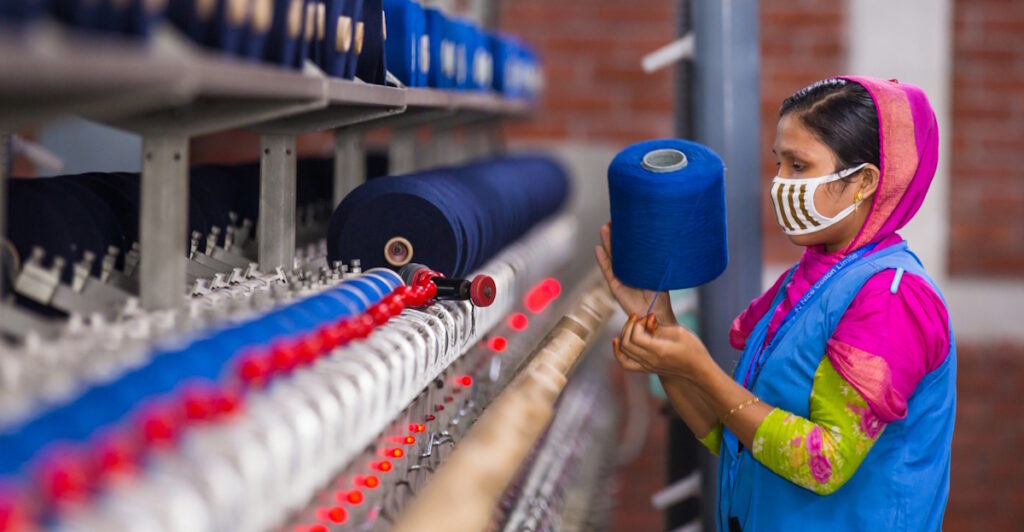
This does not mean that Pakistan has matched international standards. Serious gaps remain. Freedom of expression, gender equality, rule of law and civic space remain areas of active EU concern. However, the EU needs to consider that if GSP+ access is suspended, it would not affect the political leadership, rather the working class will face the consequences in the shape of economic collapse. It would land on the textile workers in Faisalabad and Karachi who sew the garments that fill European retailers. It would land on the women who account for the majority of that workforce. It would land on the families whose livelihoods depend on export orders that require duty-free access to remain price-competitive.
This is not a hypothetical scenario. Research published in the Journal of Public Affairs found that Pakistan’s textile sector, based on GSP+ exports, is already caught in a low value export trap, relying on price competitiveness. Withdrawing duty-free access in that context does not incentivise political reform. Rather, it would accelerate economic collapse. The EU has legitimate interests in pushing for human rights in South Asian countries, but a framework that says “we will only support you till you move according to our pace” is not rooted in fairness.
The EU-Pakistan strategic dialogue on June 1 produced a joint agreement that committed both sides to a rule-based international order, and global and regional stability. However, putting a country under punitive trade conditionality would soon close the mediation channels it has opened. A country whose working class has been pushed deeper into poverty by the withdrawal of market access is not more democratic for the experience. Kallas also noted that instability has global consequences for energy prices and fertilizer costs. The same logic applies domestically. Economic instability in Pakistan has consequences that extend well beyond the country itself.
What EU should do moving forward is not to put strict conditions, rather monitor Pakistan’s slow but steady steps in the right direction. It should demand for measurable progress on human rights. An economically stable Pakistan will benefit its current role as a mediator. It will aid the talks of US-Iran, a conflict not only affecting middle eastern security, but global energy prices. Trade can be an engine of peace, and schemes like GSP+ can be utilised for the betterment of everyone.